Units, leases, and the service charge.
Property as assets, tenancies as recurring revenue, and maintenance costed to the unit that incurred it.
10 modules·81 features·Configured on the core
The modules behind real estate.
Not a list of module names. Each one below opens onto what is inside it and why a real estate business needs it — so you can check it against how your operation actually runs.
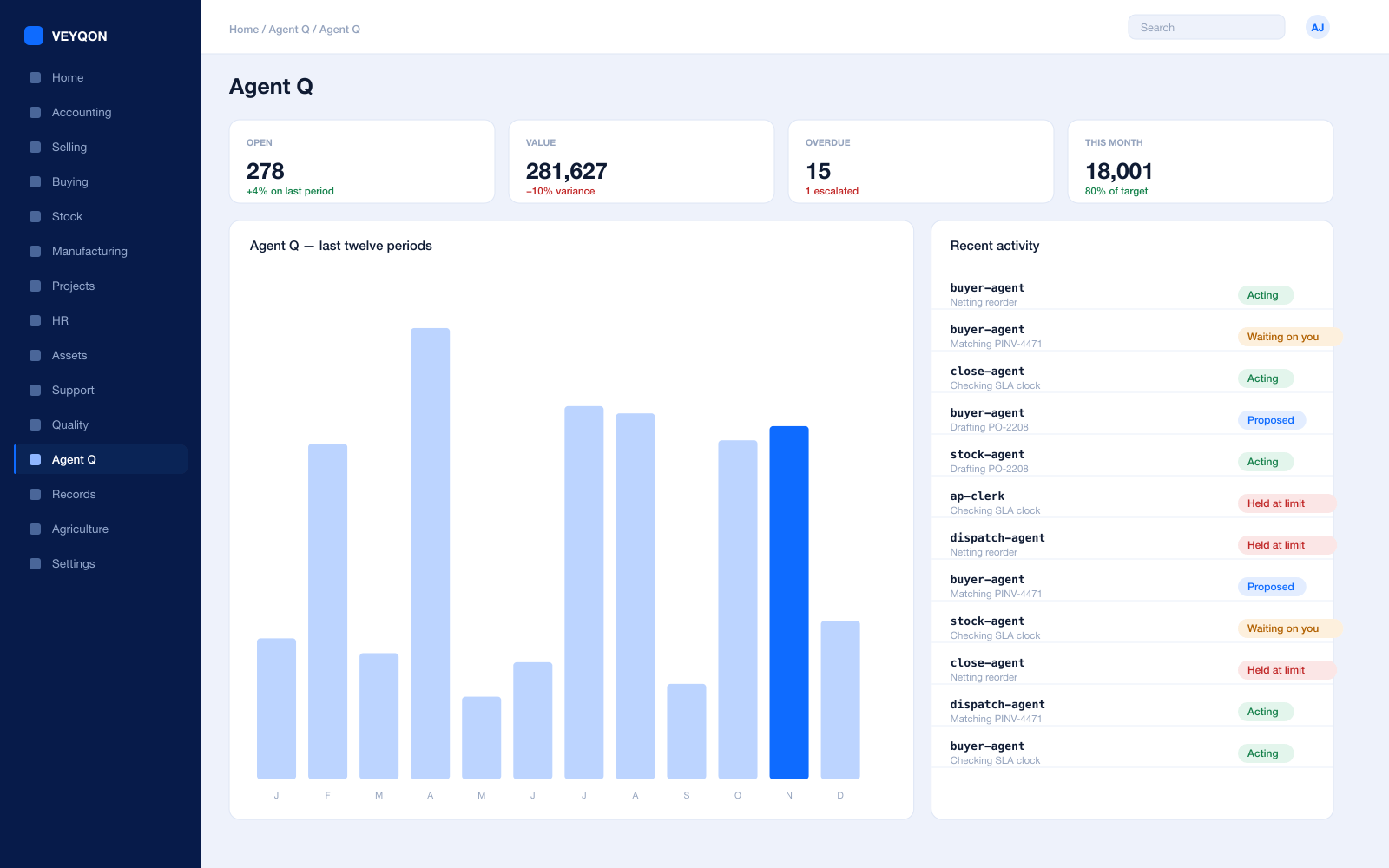
Agent Q
Agents that read your own records and act on them, scoped to how a real estate business runs.
Grounded in live records
Every answer is drawn from your own ledger with your permissions applied, and names the documents it used. Nothing is answered from a snapshot or a summary.
A role, not a prompt
Each agent is scoped like a job — accounts payable, procurement, dispatch, period close — with the same limits you would put on the person doing it.
Explicit tool permissions
An agent holds a named list of the actions it may take. Matching an invoice does not imply paying one.
Value and action limits
A hard ceiling per agent, per period, and per document type, which it cannot cross however it is asked.
The queue
What every agent is working on, what is waiting on a person, and what has been held — in one place, with the reason on each item.
Triggers
An arriving document, a breached threshold, a date, or a state change on a record. Agents start on events, not on somebody remembering.
Human approval gates
Anything over a limit routes to a named person, with the reasoning attached, so approving takes seconds rather than an investigation.
Escalation paths
Who it hands to when it reaches a limit, how long it waits first, and what that person sees when it arrives.
Segregation of duties
An agent cannot approve what it raised. The rule that applies to your people applies to your agents.
Full reasoning log
Every step is written to the audit trail on the document it touched, so a decision can be read back months later.
Ask in plain language
The console answers operational questions from live records and offers the next action, rather than handing back a paragraph.
Spend control
Ceilings per agent and per period, so autonomy runs to a budget you set rather than an open account.
Portfolio & Units
Every unit as an asset, with its obligations attached.
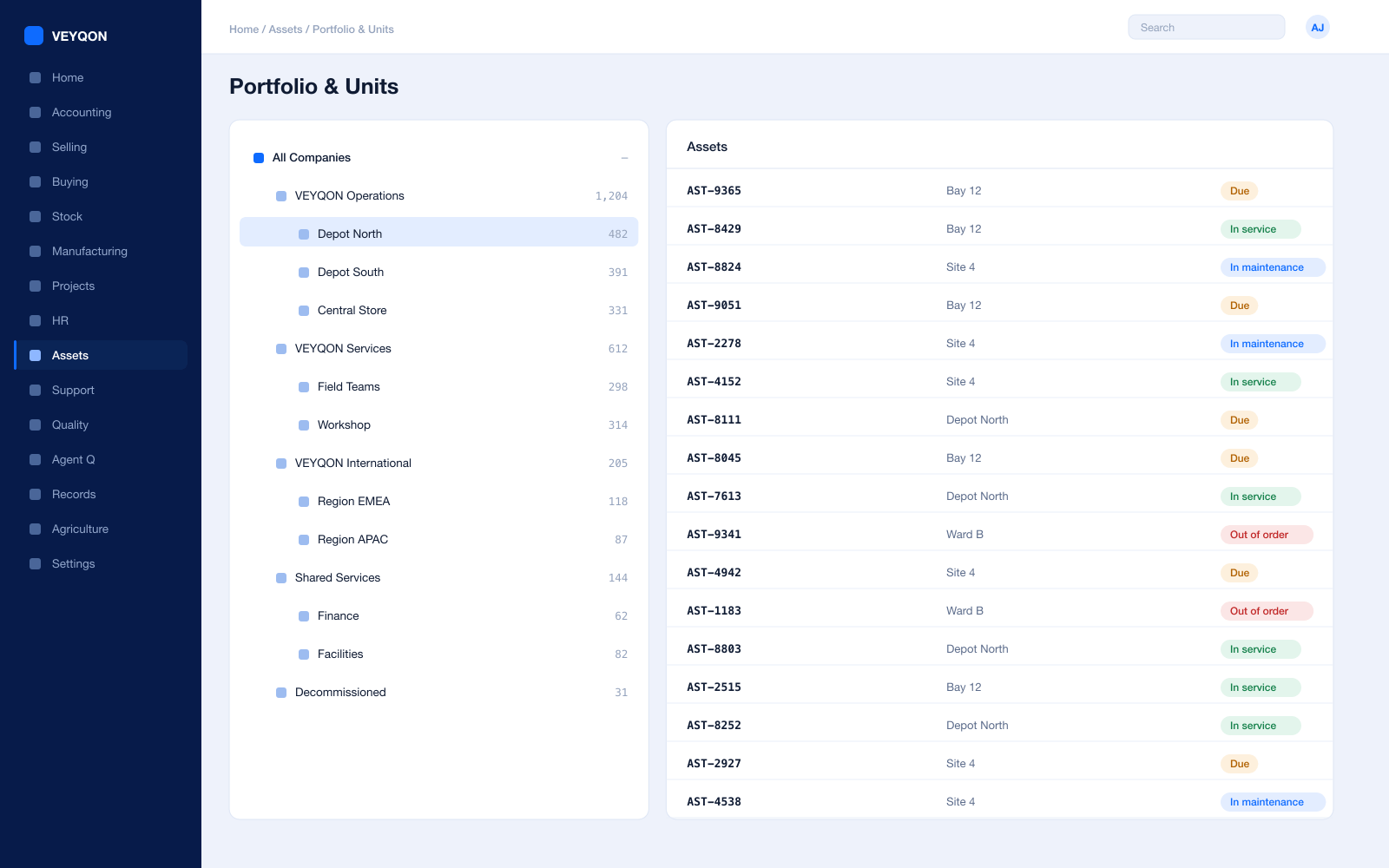
Asset register
Buildings and units with acquisition cost, category, and custodian, so the portfolio is a register rather than a schedule.
Location hierarchy
Estate, building, floor, and unit, so cost and revenue attach to something precise.
Depreciation per finance book
A different method, useful life, and residual value for the statutory book and the management book.
Capital work in progress
Development and refurbishment spend accumulating against the asset, capitalised when it enters service.
Composite assets
A building assembled from its components, with the components’ cost capitalised into the whole.
Value adjustment
Revaluation posted to the ledger rather than tracked alongside it in a valuer’s spreadsheet.
Insurance
Insurer, policy dates, insured value, and coverage on the asset, with the dates visible before they lapse.
Movement and custodian
Transfers between entities and custodians, with a history rather than a recollection.
Disposal
Sale or write-off with the gain or loss posted and the asset closed properly.
Leases & Recurring Billing
Rent and service charge that invoice themselves, on the terms in the lease.
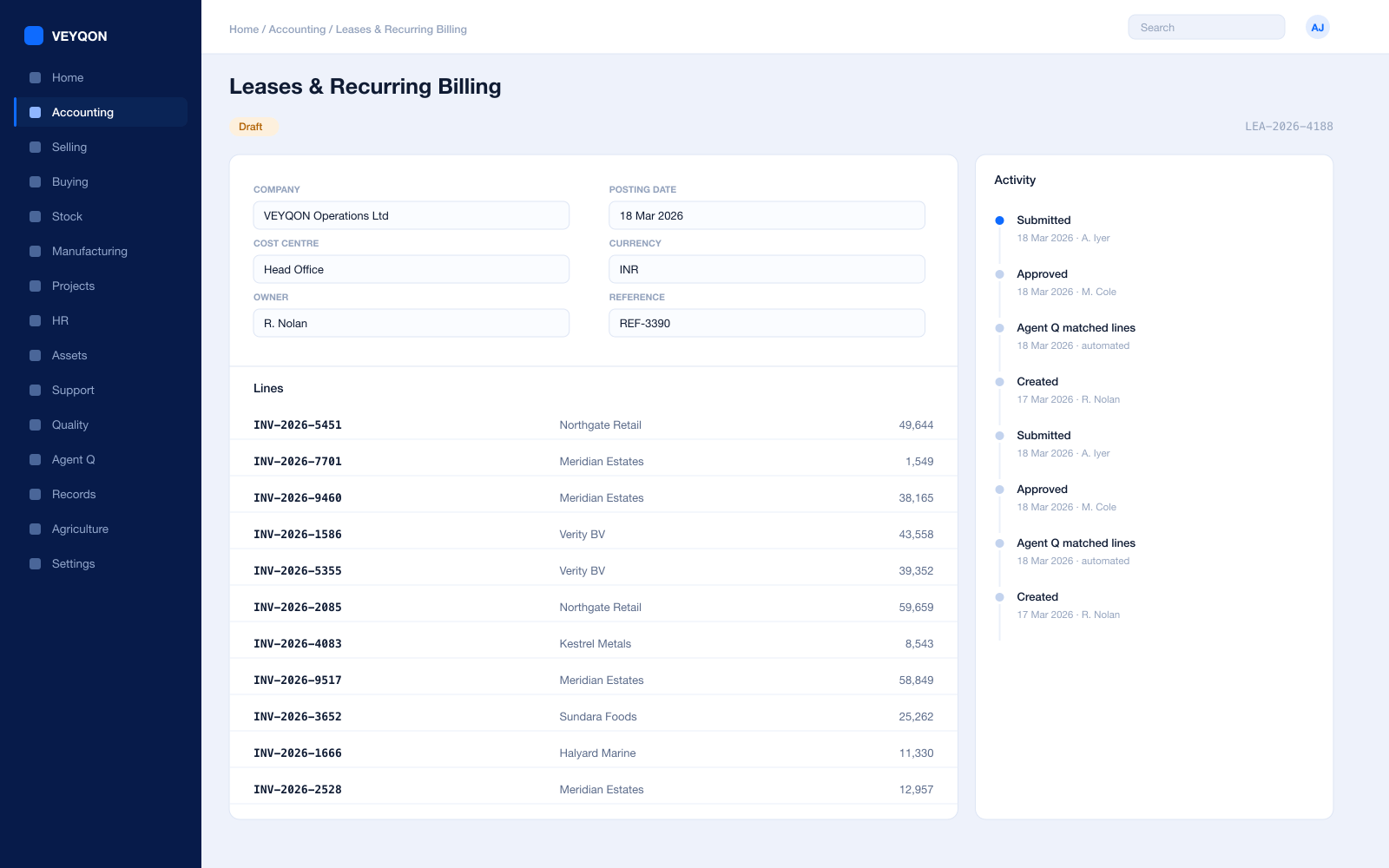
Tenancy as a subscription
Rent billed on an interval and count — monthly, quarterly, or annually — generated rather than diarised.
Plans and rates
Priced at a fixed rate, from a price list, or as a monthly rate that prorates, so a mid-month start is not a manual credit.
Prepaid or postpaid
Invoice at the start of the period, after it, or a set number of days before — whichever the lease actually says.
Follow calendar months
Align billing to calendar quarters rather than anniversary dates, which is how most leases are actually written.
Escalation
A rate change taking effect on its date through the plan, rather than by somebody remembering to reprice in April.
Bill through arrears
Keep billing where a previous invoice is unpaid, or stop — a policy on the record rather than a monthly decision.
End of term
Stop future billing at the end of the current term without cancelling the invoices already raised against it.
Payment terms
Instalments, credit days, and month-end due dates driving the schedule arrears is measured from.
Taxes
Tax templates applied consistently across every invoice the tenancy generates.
Service Charge
A charge that reconciles to what was actually spent.
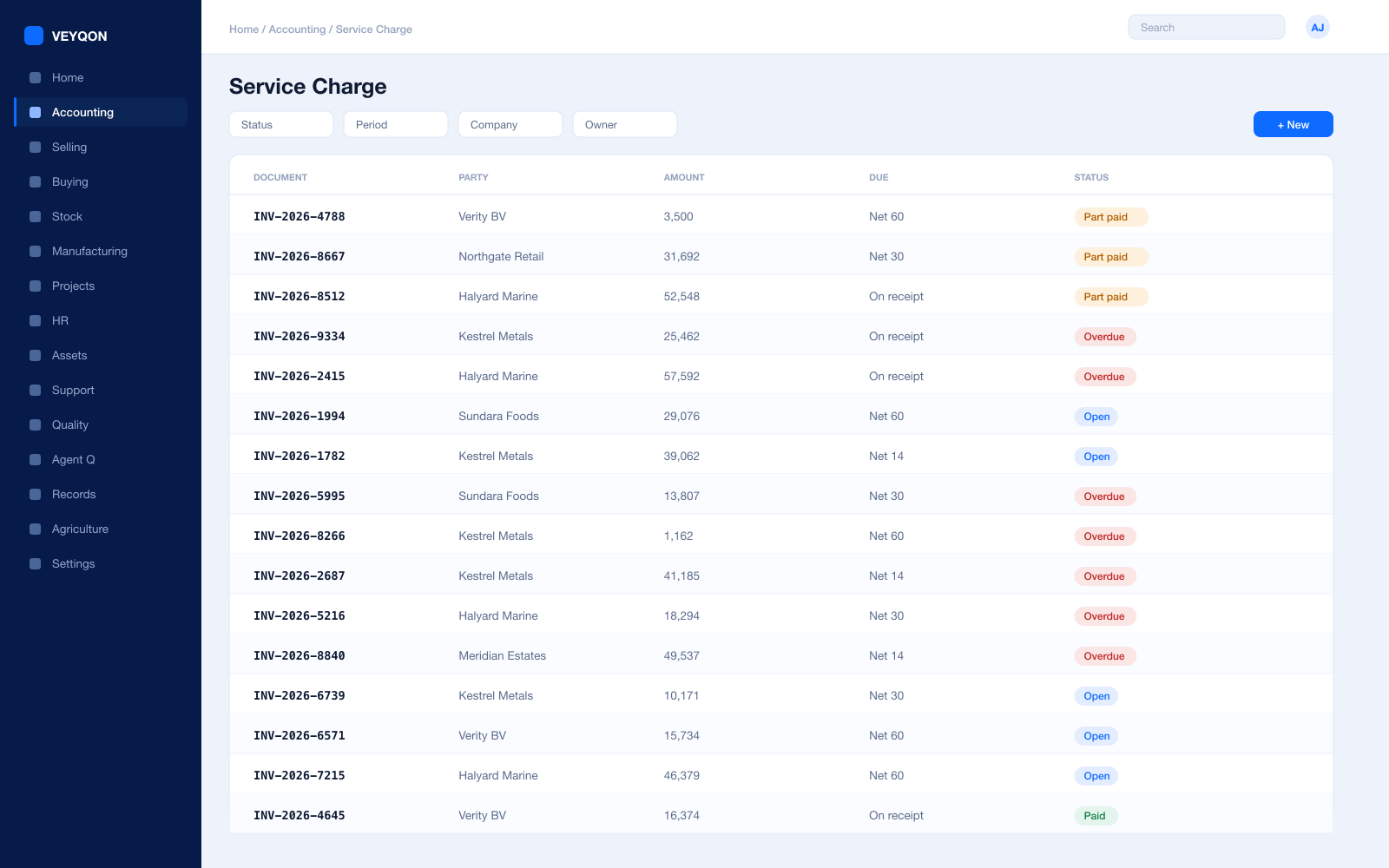
Building cost centres
Each building as a cost centre, so recoverable spend is separated from your own cost by structure rather than by memory.
Apportionment
One shared cost split across units by percentage, recorded on the allocation rather than in a spreadsheet.
Budgets
A service-charge budget per building, with the action on exceeding set to warn or to stop.
On-account billing
Estimated charge billed on the same schedule as rent, so the tenant sees one document rather than two.
Actual against estimate
What was spent against what was recovered, per building, during the year rather than at the end of it.
Balancing charge
The reconciliation raised as its own invoice or credit, traceable to the postings behind it.
Evidence for tenants
The spend behind the charge available as a report, which is what a challenged service charge turns on.
Audit trail
Every posting carries who, when, and from which document, so a year-old query has an answer.
Maintenance
Statutory and planned works raised before they lapse.
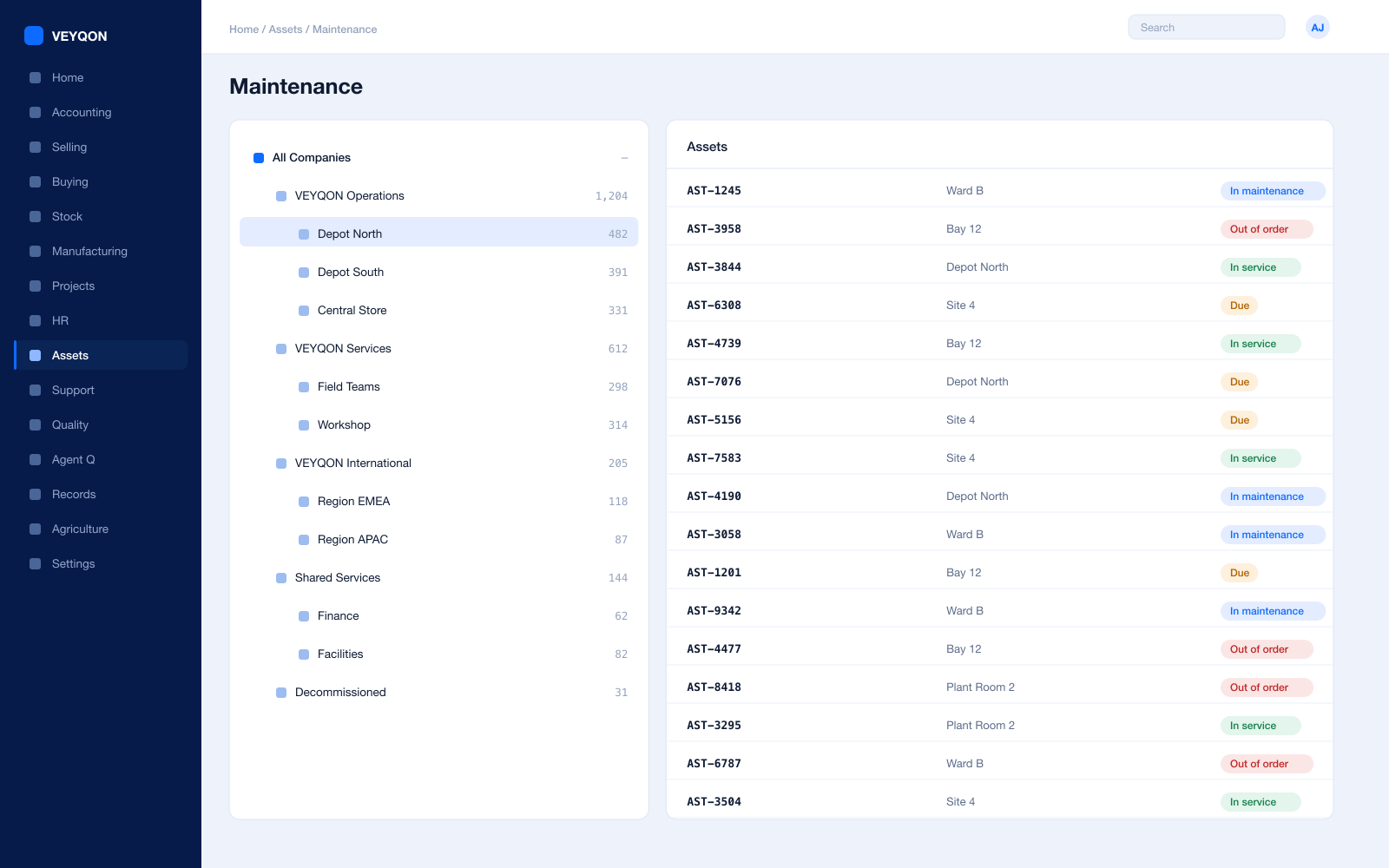
Maintenance schedules
Planned and statutory works per building and per asset, generating a log for each occurrence.
Periodicity
Weekly, monthly, quarterly, half-yearly, yearly, or random, generating a separate row for each activity between two dates.
Teams and assignment
A maintenance team with members, and each task assigned to a named person rather than to the team in general.
Certification required
A task marked as needing a certificate — gas, lift, fire — with the log held open until one is attached.
Logs and certificates
What was done and by whom, with the certificate on the record rather than in a folder in the managing agent’s office.
Reactive repair
A failure record with the date, the downtime, and the cost, with parts consumed from stock onto the repair.
Capitalise or expense
Where a repair extends useful life, the increase updates the depreciation schedule rather than being argued at year end.
Cost to the unit
Works costed to the building and the unit that incurred them, which is what makes recharge defensible.
Tenant Requests
A request against the unit, with a clock on it.
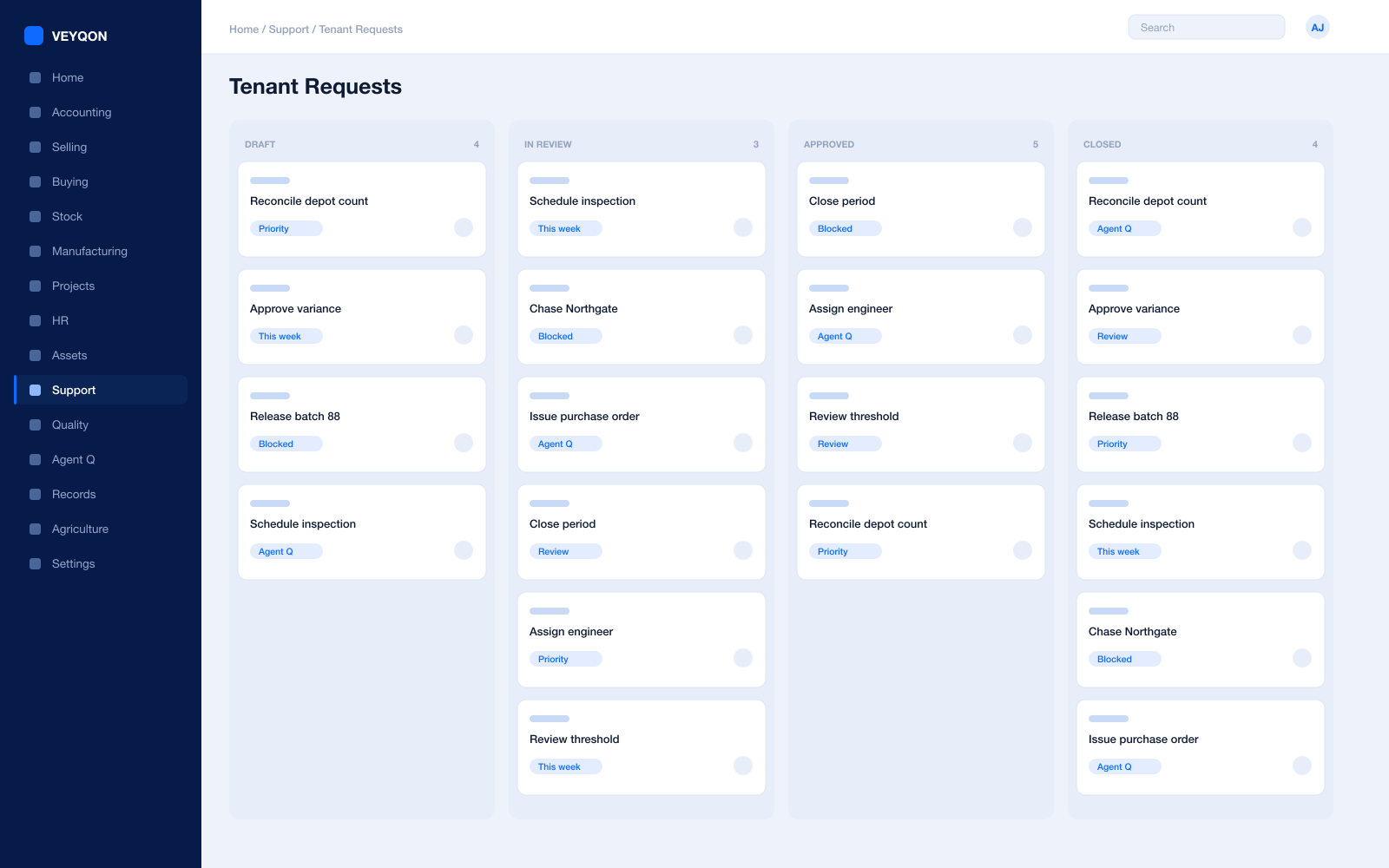
Issues
Raised by email, portal, or phone, and linked to the tenant, the unit, and the asset they concern.
Service level agreements
Priorities with a time to respond and a time to resolve, applied by tenant, tenant group, or territory.
Support hours
The clock runs only in the hours you actually cover, and stops on the days the holiday list says you are shut.
SLA pause
The timer holds while you are waiting on access or on the tenant, with the hold time added back.
To a visit
A maintenance visit raised from the request, recording the work and closing against the unit.
Resolution record
What was done, by whom, and when, attached to the request rather than living in an inbox.
Tenant portal
Tenants raising and following their own requests, and seeing their statements, without phoning the office.
Projects & Fit-out
Refurbishment costed to the unit it improves.
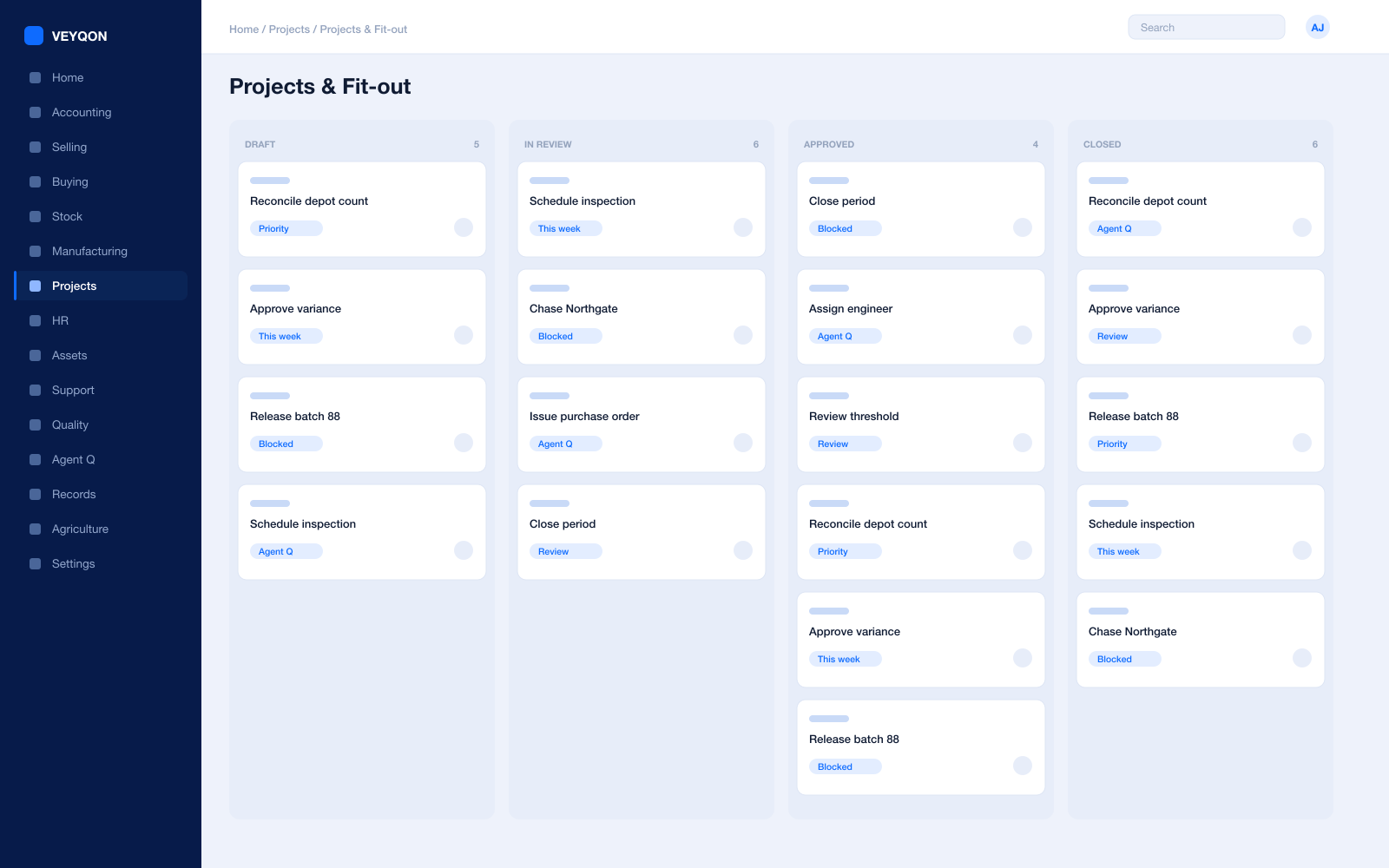
A project per scheme
Refurbishment and fit-out as a project, with tasks and a schedule the works hang off.
Budget and commitment
Budget per project, with orders reducing the remaining budget the moment they are raised.
Tasks and dependencies
What has to happen before what, so a slipped trade shows as a slipped handover date.
Material to the project
Goods issued to the scheme rather than to a general store, so the unit carries what went into it.
Capitalisation
Spend accumulating as work in progress and capitalised into the asset when the unit is back in service.
Cost against value
Actual and committed against the approved scheme value, while there is still time to act on a variance.
Timesheets
In-house hours booked against the scheme at a costing rate, so labour is in the cost rather than in overhead.
Procurement
Contractors and consumables, bought against the building.
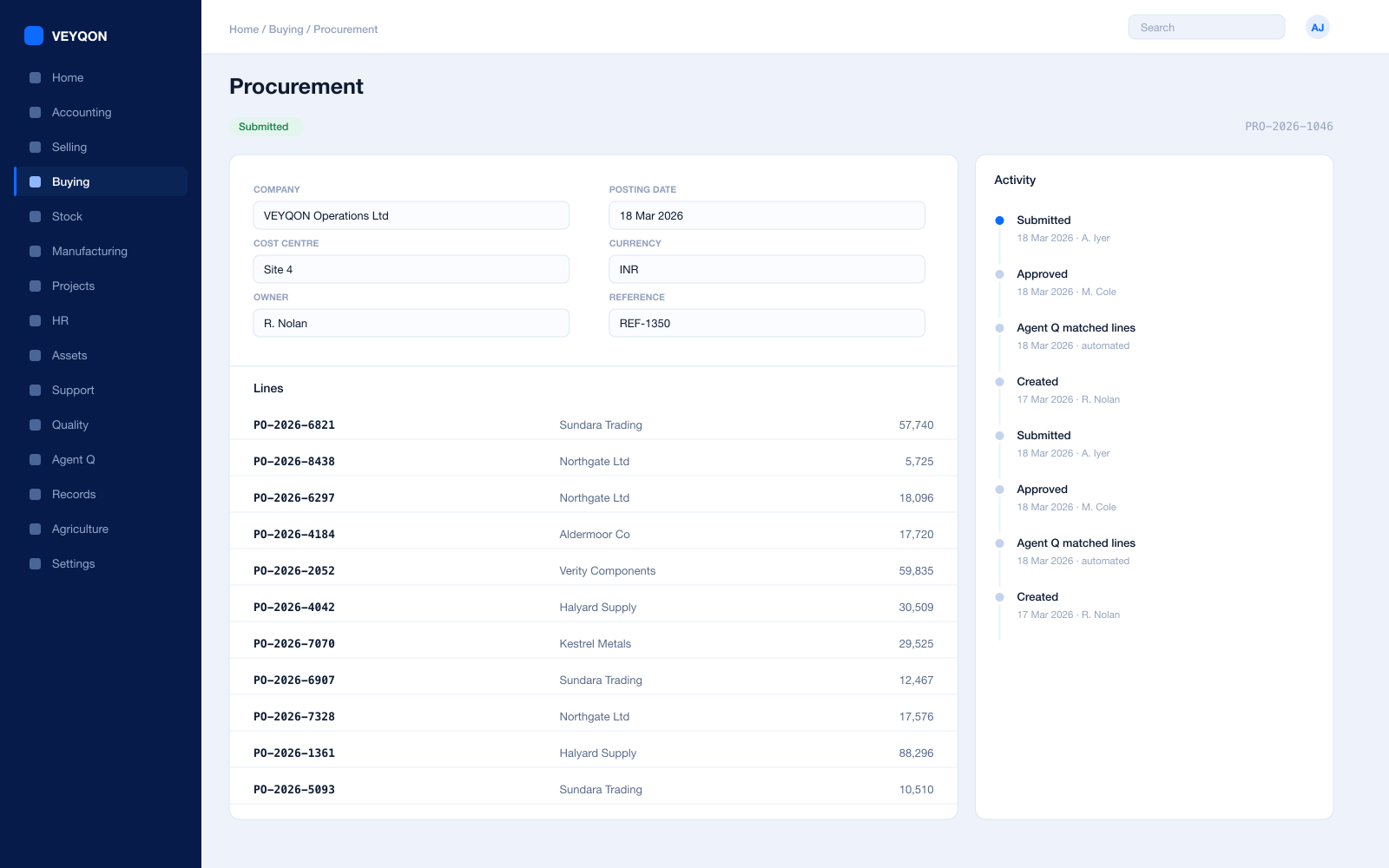
Material requests
Raised from a schedule, a request, or by hand, with approval routing by value and cost centre.
Requests for quotation
Out to several contractors at once, with a portal for them to respond on and responses kept comparable.
Purchase orders
Against supplier price lists, with the building and unit carried through so the cost lands where it belongs.
Framework agreements
A blanket order as an agreed rate over a period, drawn down by individual instructions.
Three-way matching
Order, receipt, and invoice reconciled before anything is paid, with the variance visible rather than absorbed.
Contractor scorecards
Quality, responsiveness, and delivery scored from your own records, with standings that can block an award.
Consumables
Stores held per estate with reorder levels, so a caretaker does not buy at retail on a Saturday.
Accounts
Net operating income per building, from the ledger.
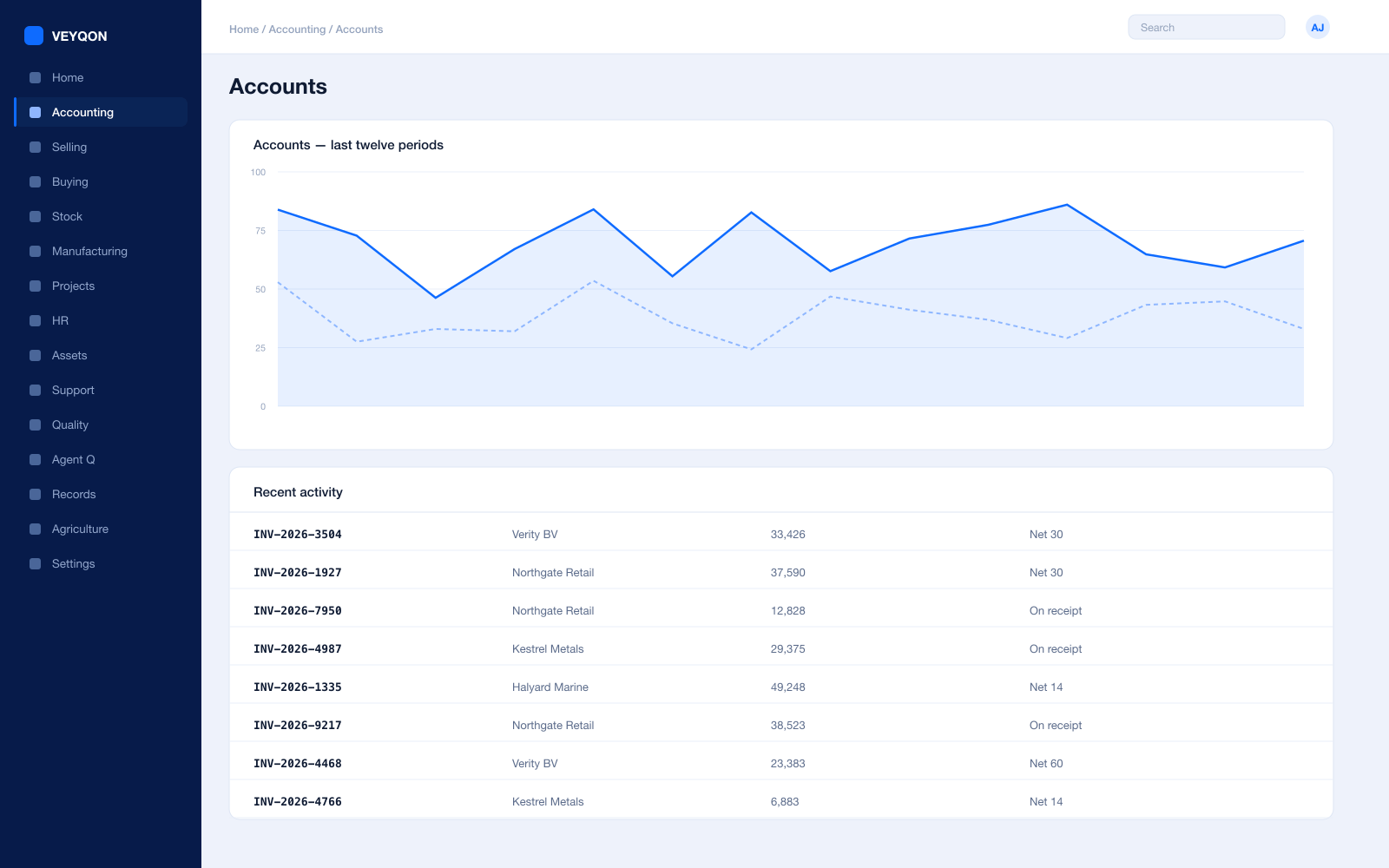
Cost centres and dimensions
Estate, building, and unit as cost centres and dimensions, so income and cost read at any level.
Net operating income
Rent and recoveries against operating cost per building, from the same postings that produced the invoices.
Budgets
Against cost centres and projects, checked at request, order, and actual, with the action set per stage.
Arrears and dunning
Ageing by tenant, and overdue instalments consolidated into a dunning with a fee, an interest rate, and letter text.
Deposits and credit
Held amounts and exposure per tenant, with new commitments blocked over the ceiling and a named role for exceptions.
Multi-company and currency
Special-purpose vehicles kept separate, with intercompany transfers and revaluation posting to the ledger.
Period close
Accruals, reconciliation, and a period lock that stops anyone back-posting into a quarter already reported.
Immutable audit trail
Every posting carries who, when, and from which document — which is what a service-charge challenge turns on.
HR & Payroll
Caretakers, cleaners, and the site teams.
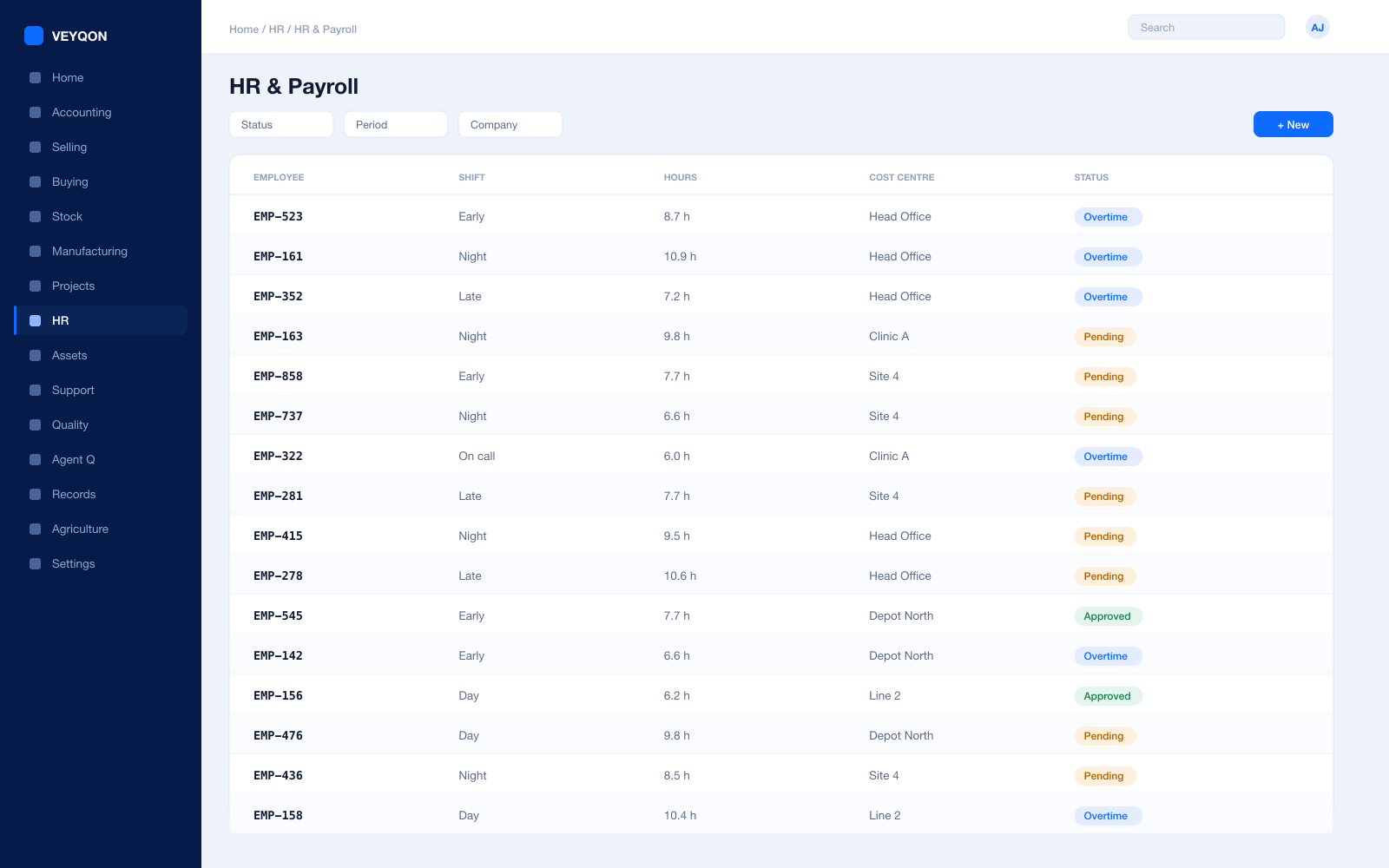
Shifts and rotas
Site cover planned with the roster visible before the week starts rather than arranged on the morning.
Attendance and check-in
From devices or check-in, feeding shift compliance and overtime instead of a signing-in book.
Labour to the building
Hours costed to the building they were worked in, so recoverable staff cost is evidenced rather than apportioned.
Certification
Competencies and checks held against the employee, with expiry dates that surface before they lapse.
Leave and holiday lists
The working calendar that cover planning is actually built against.
Payroll
Salary structures and runs with statutory deductions, posted into the same ledger as the rent.
One pass through real estate, end to end.
- 01
Register
Units held as assets with their obligations and valuations.
- 02
Let
Tenancy creates the recurring billing, including escalation clauses.
- 03
Maintain
Planned and reactive works costed to the building and the unit.
- 04
Reconcile
Service charge settles against what was actually spent.
Running real estate on VEYQON, in four steps.
It is a subscription, not a project.
- 1
Subscribe
Pay by card. Provisioned straight away.
Minutes - 2
Bring your data
Balances, items, customers, suppliers.
Day one - 3
Switch modules on
Warehouses, limits, and approvals.
Week one - 4
Go live
Run parallel, then cut over.
You choose
All 10 modules included. Nothing sold separately.