Restricted funds that stay restricted.
Donors, grants, memberships, and volunteers tracked against the fund they belong to, so a restricted pound is reportable to the donor who gave it.
10 modules·77 features·Configured on the core
The modules behind non-profit.
Not a list of module names. Each one below opens onto what is inside it and why a non-profit business needs it — so you can check it against how your operation actually runs.
Archived upstream on 31 July 2025 and read-only since. We maintain the donor, member, and grant records ourselves — say so in any procurement conversation rather than presenting it as upstream-supported.
Agent Q
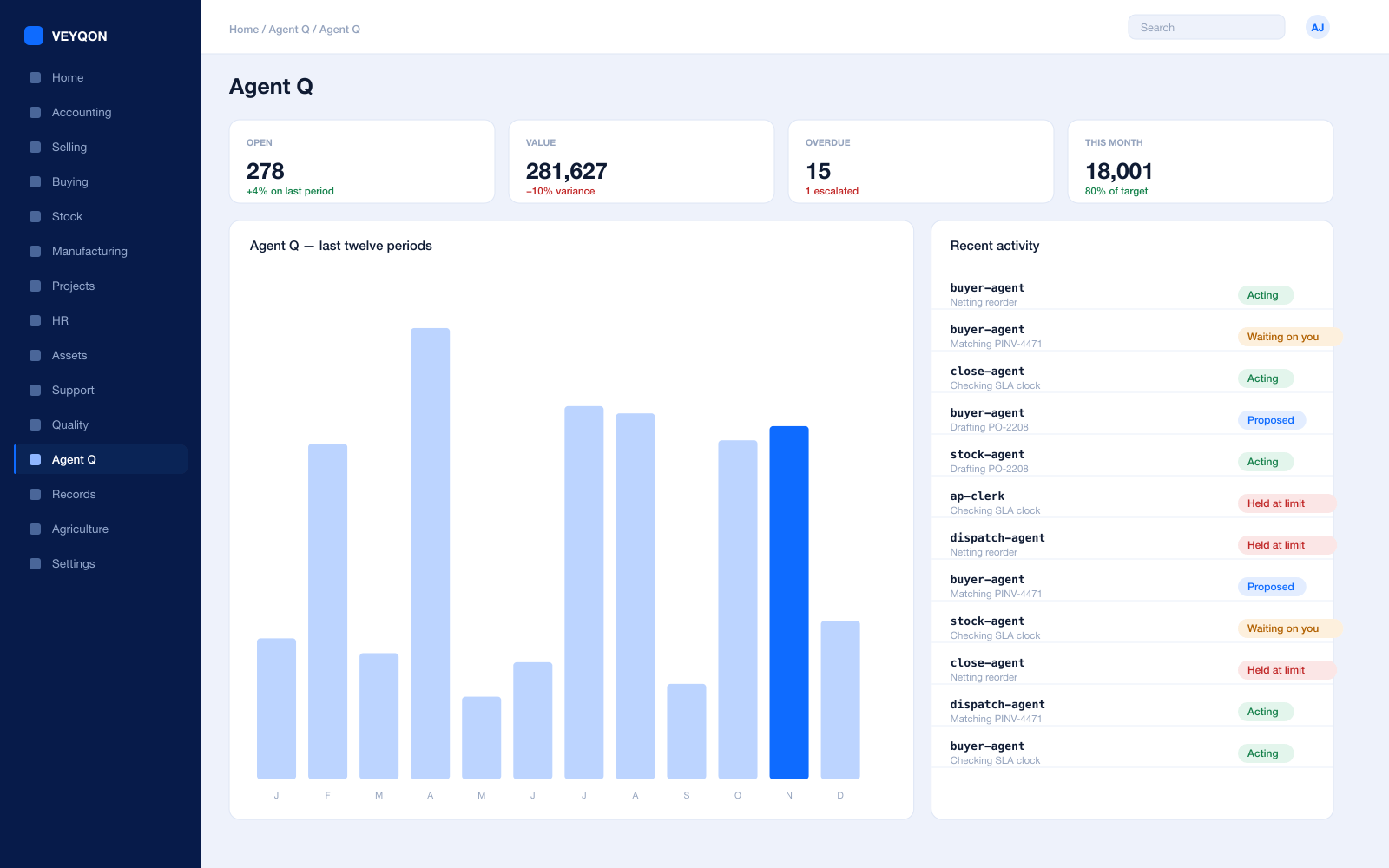
Agents that read your own records and act on them, scoped to how a non-profit business runs.
Grounded in live records
Every answer is drawn from your own ledger with your permissions applied, and names the documents it used. Nothing is answered from a snapshot or a summary.
A role, not a prompt
Each agent is scoped like a job — accounts payable, procurement, dispatch, period close — with the same limits you would put on the person doing it.
Explicit tool permissions
An agent holds a named list of the actions it may take. Matching an invoice does not imply paying one.
Value and action limits
A hard ceiling per agent, per period, and per document type, which it cannot cross however it is asked.
The queue
What every agent is working on, what is waiting on a person, and what has been held — in one place, with the reason on each item.
Triggers
An arriving document, a breached threshold, a date, or a state change on a record. Agents start on events, not on somebody remembering.
Human approval gates
Anything over a limit routes to a named person, with the reasoning attached, so approving takes seconds rather than an investigation.
Escalation paths
Who it hands to when it reaches a limit, how long it waits first, and what that person sees when it arrives.
Segregation of duties
An agent cannot approve what it raised. The rule that applies to your people applies to your agents.
Full reasoning log
Every step is written to the audit trail on the document it touched, so a decision can be read back months later.
Ask in plain language
The console answers operational questions from live records and offers the next action, rather than handing back a paragraph.
Spend control
Ceilings per agent and per period, so autonomy runs to a budget you set rather than an open account.
Donors & Giving
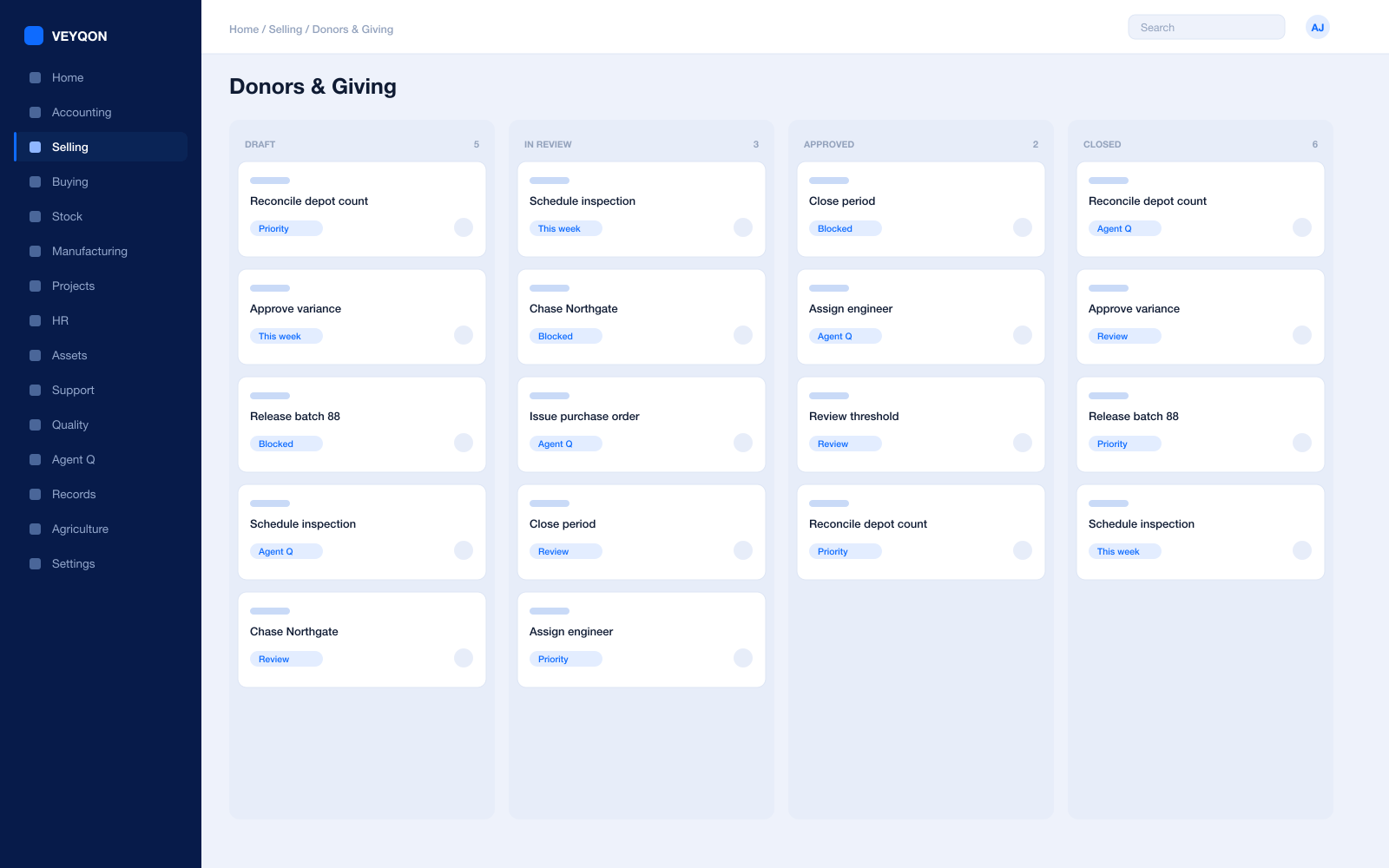
Every gift against a donor and the fund it was given for.
Donor record
One record per donor with their history, preferences, and the relationship behind the giving.
Donations
Each gift recorded against the donor and posted to the ledger, rather than reconciled from a bank statement later.
Restriction on the gift
The fund or programme a gift is given for, captured when it arrives rather than assigned at year end.
Recurring giving
Standing gifts as subscriptions on an interval and count, generated rather than watched for.
Tax relief
Declarations held against the donor, so a claim is assembled from records rather than from a spreadsheet.
Giving analysis
By donor, campaign, fund, and period, off the same ledger the trustees see.
Campaigns and appeals
Which appeal produced the gift, traceable from the first contact through to the receipt.
Contacts and consent
Communication preferences and consent held on the record, so a mailing list is defensible.
Funds & Restriction
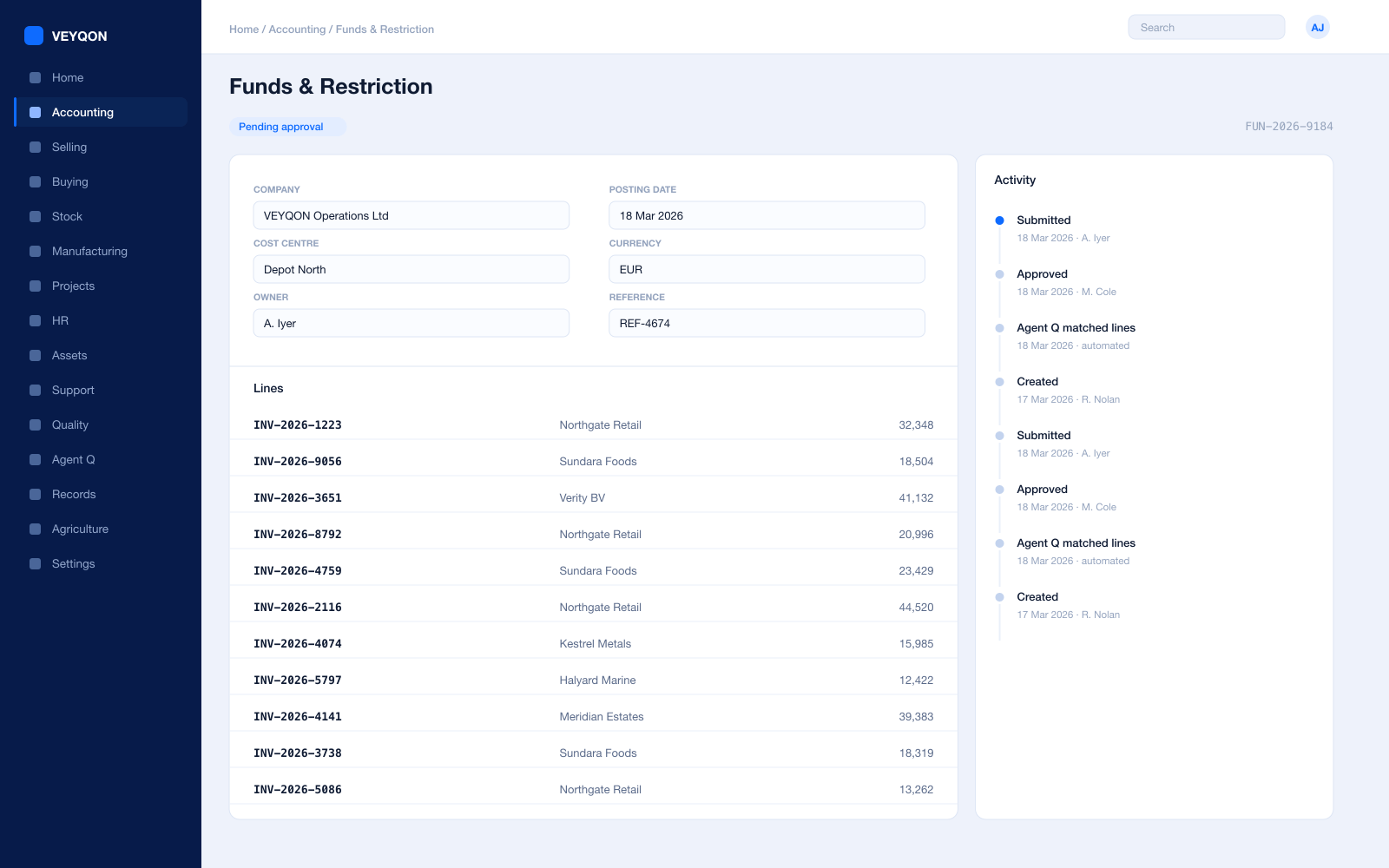
A restricted pound that stays restricted, provably.
Funds as cost centres
Each restricted fund as a cost centre, so restriction is a structure in the ledger rather than a note in a policy.
Accounting dimensions
A second axis alongside cost centre, so spend reads by fund and by programme at the same time.
Allocation
One shared cost split across several funds by percentage, recorded rather than apportioned in a spreadsheet.
Budgets that stop
A budget per fund with the action on exceeding set to stop, so a restricted balance cannot be overspent by accident.
Annual and periodic limits
An annual ceiling and a period ceiling checked independently, so a grant year is not consumed in a quarter.
Checked at commitment
Tested on the request and again on the order, not only when the invoice arrives and the money has gone.
Fund statements
Income, expenditure, and balance per fund, in a form a trustee or a funder can be handed directly.
Period close
Accruals, reconciliation, and a period lock, so a fund report cannot change after it has been sent.
Audit trail
Every posting carries who, when, and from which document — which is precisely what an independent examination looks for.
Grants
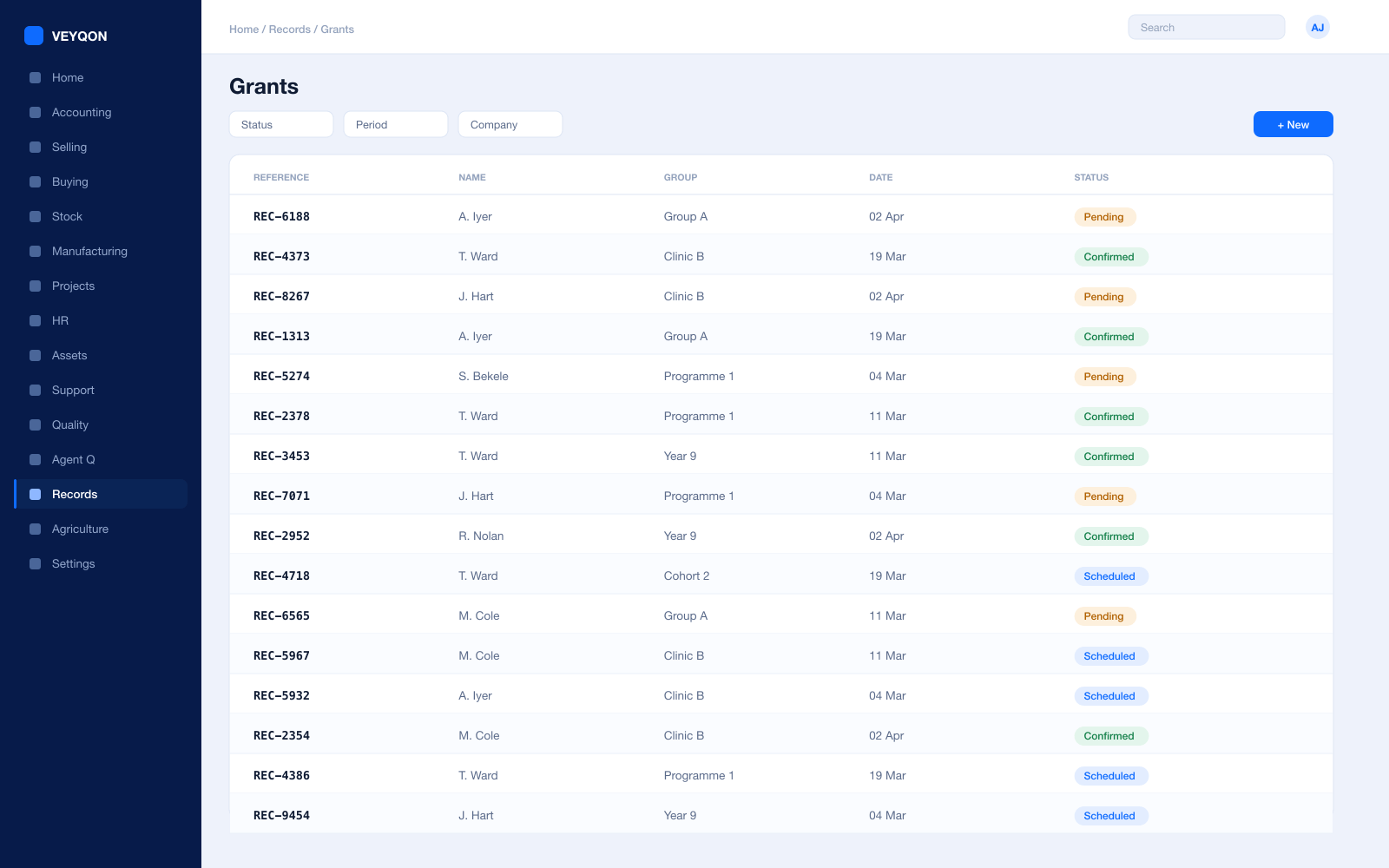
The award, its conditions, and the reporting you promised.
Grant applications
Applications tracked from submission to decision, so a pipeline of funding exists rather than a folder of drafts.
Award to fund
An award creating the restricted fund it will be spent through, so the link is structural rather than remembered.
Reporting obligations
The dates and the deliverables attached to the award, surfacing before they are late rather than after.
Grant to programme
The funded work as a project, so spend against the award is the project cost rather than an extraction.
Spend against award
Committed and actual against the award value, while there is still time to move the plan.
Underspend and clawback
Remaining balance visible during the grant period, when it can still be spent as intended.
Evidence
The documents and postings behind a funder report retained against the award rather than assembled each time.
Programmes & Delivery
What the money actually did.
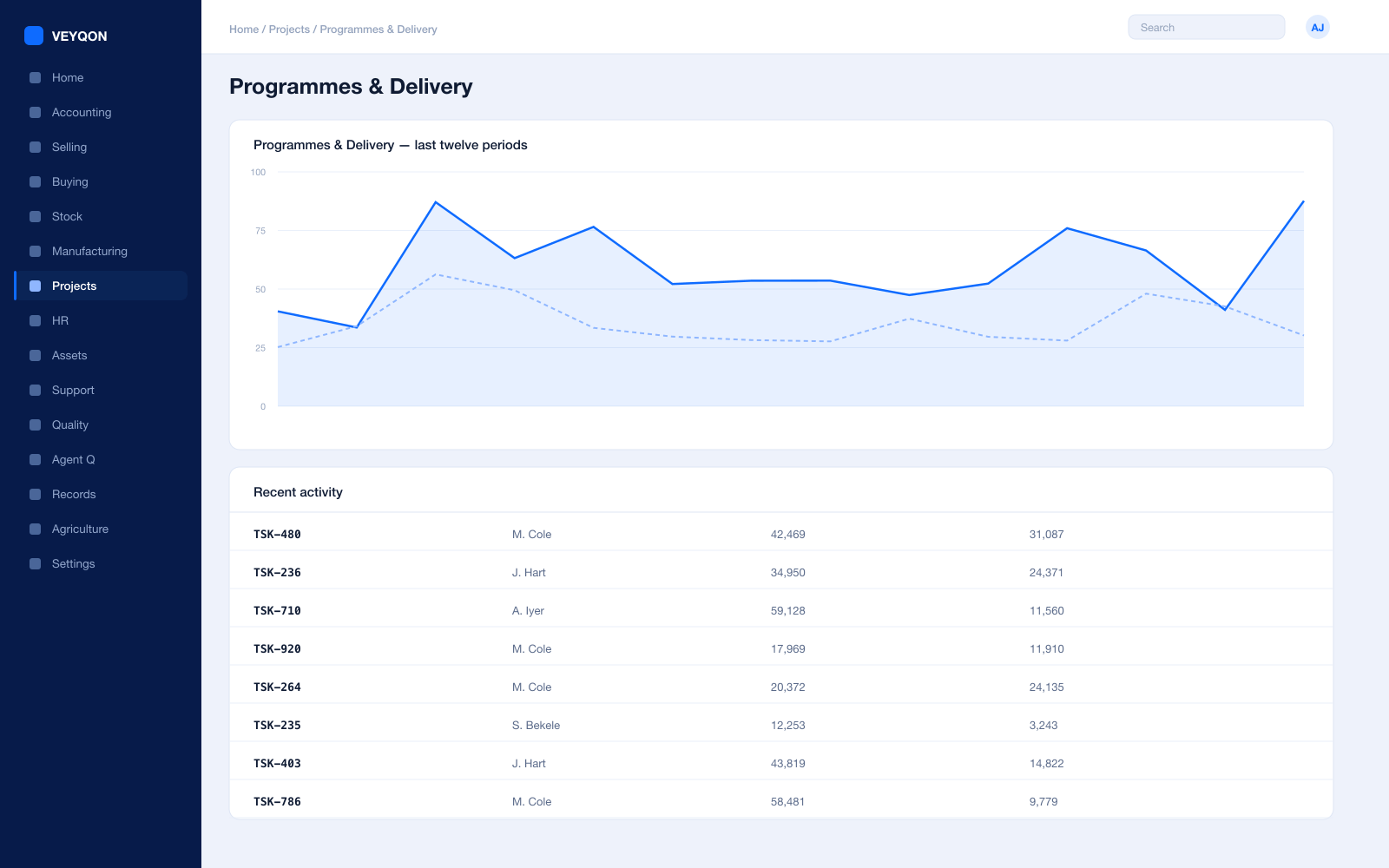
Programme as a project
Delivery work as a project with tasks and a schedule, so activity is planned rather than described afterwards.
Tasks and dependencies
What has to happen before what, so a delayed intake shows as a delayed programme.
Timesheets
Staff and volunteer hours booked against the programme at a cost rate, so delivery cost includes people.
Material and distribution
Goods issued to a programme rather than to a general store, so a distribution is costed and counted.
Cost against budget
Actual and committed against the programme budget, with the action on exceeding set deliberately.
Cost per outcome
Programme cost against the units of activity delivered, from the ledger rather than an annual estimate.
Programme on every document
The reference carried on orders, timesheets, and invoices, which is what makes the cost figure true.
Impact reporting
Activity and cost together in a report a funder can read, rather than two documents that have to be reconciled.
Volunteers
Skills, availability, and the hours that are real cost.
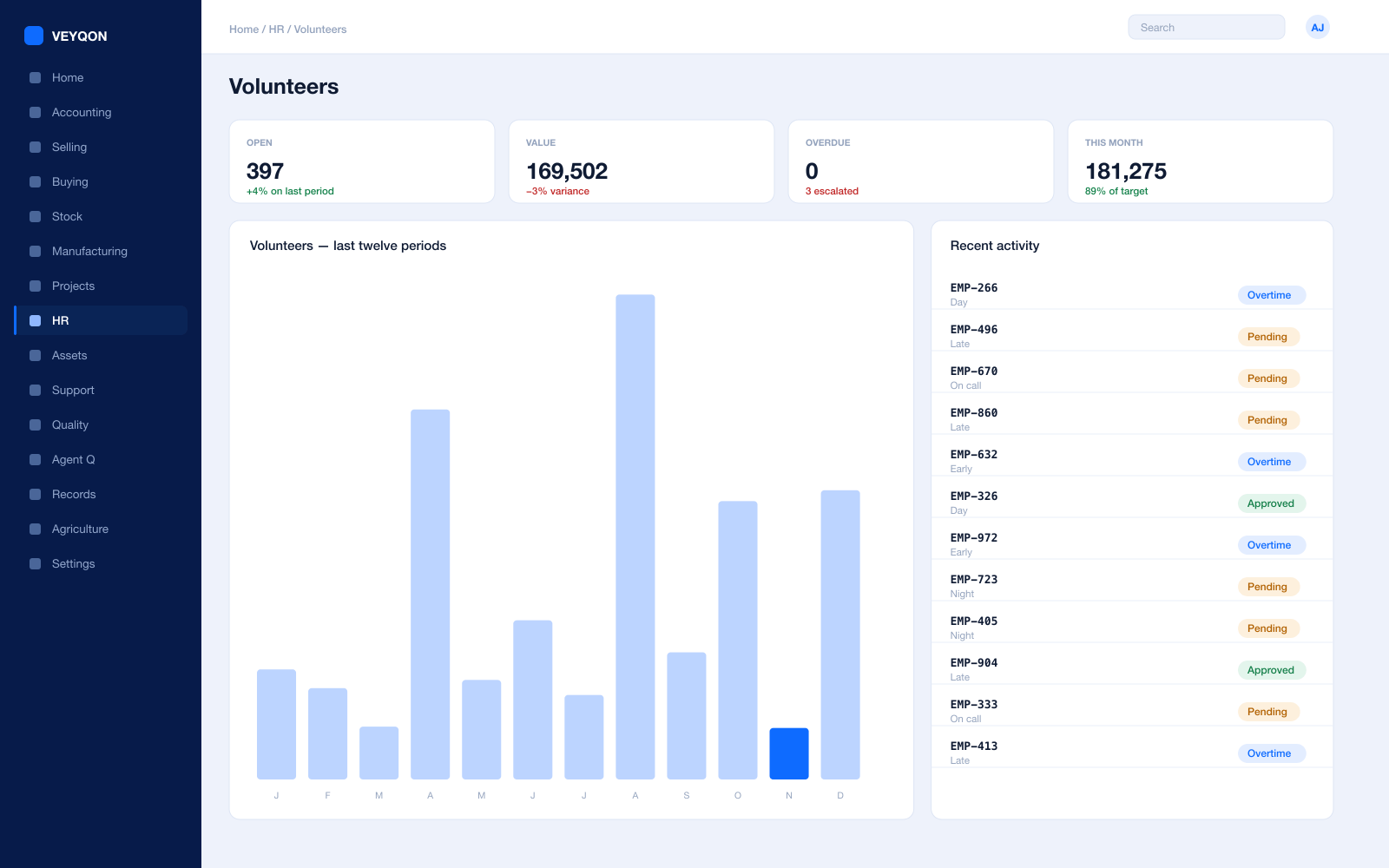
Volunteer record
One record with skills, availability, and the programmes they support, rather than a rota in a spreadsheet.
Availability and rota
When somebody can actually help, so a shift is filled from the record rather than by ringing round.
Hours contributed
Time recorded against a programme, which is what lets you value volunteer contribution in a report.
Checks and training
Safeguarding checks and induction held against the volunteer, with expiry dates that surface before they lapse.
Expenses
Out-of-pocket claims against a programme cost centre, approved and posted rather than reimbursed informally.
Recruitment
Enquiries tracked from interest through to induction, so a willing volunteer is not lost in an inbox.
Members & Chapters
Supporters who renew, and regions that report for themselves.
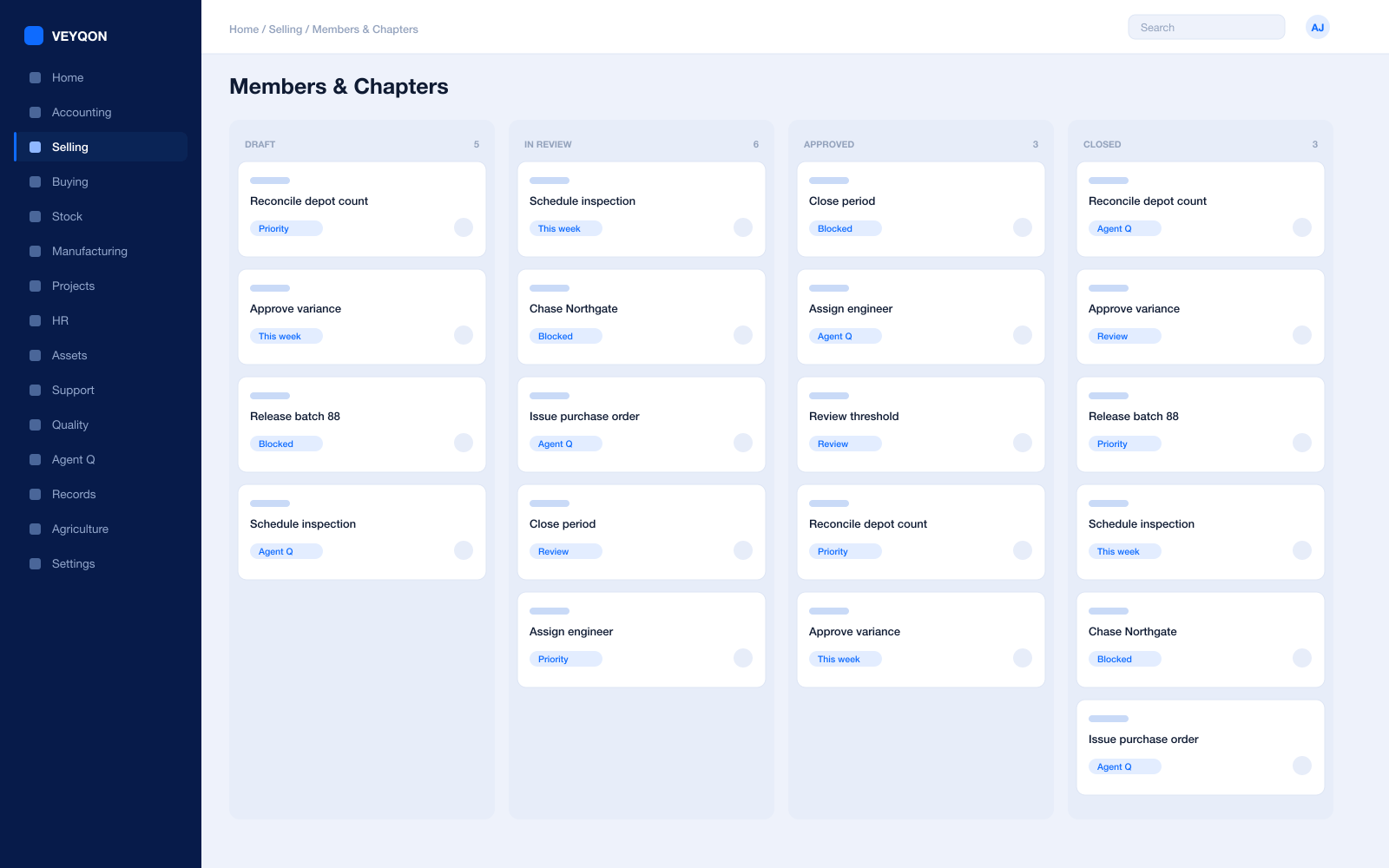
Member record
One record per member with category, chapter, and history, distinct from a donor even where they are the same person.
Membership term
Term, fee, and renewal date on the record, with lapse handled as a state rather than as silence.
Renewal
Recurring billing on an interval and count, with reminders sequenced ahead of expiry rather than after it.
Chapters
Regional groups with their own members and their own cost centre, so a chapter can be reported on separately.
Subscription income
Membership fees posting to the ledger as they are raised, not when somebody reconciles a bank feed.
Retention
Joins, renewals, and lapses per period and per chapter, from the same records the mailing goes out from.
Self-service
Members updating details, renewing, and booking through a portal rather than by emailing the office.
Accounts
Statements a trustee or a funder can be handed directly.
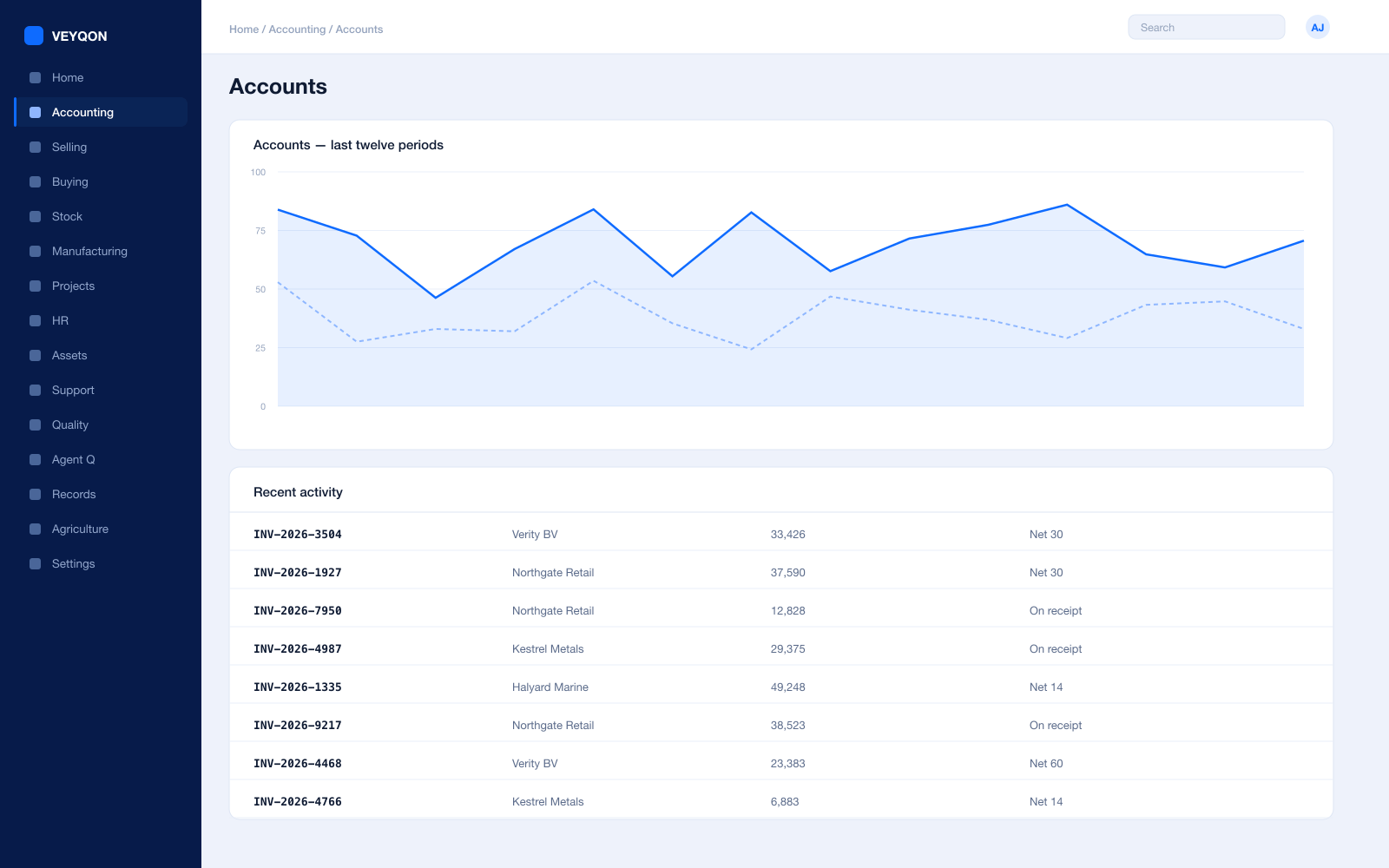
Fund accounting structure
Restricted, unrestricted, and designated funds as cost centres and dimensions on a standard double-entry ledger.
Income recognition
Gifts, grants, and trading income recognised in the period they belong to rather than the one they arrived in.
Budgets
Per fund and per programme, checked at request, order, and actual, with the action set per stage.
Multi-currency
Overseas programmes and funders in their own currency, with revaluation posting to the ledger.
Period close
Accruals, reconciliation, and a period lock that stops anyone back-posting into a year already reported.
Statutory reporting
The returns your regulator expects, from the same postings that produced the management accounts.
Immutable audit trail
Every posting carries who, when, and from which document — which is what an independent examiner asks for.
Cost of raising funds
Fundraising cost against income raised, as a figure rather than an argument at a trustee meeting.
HR & Payroll
Small teams, restricted salary lines, and checks that matter.
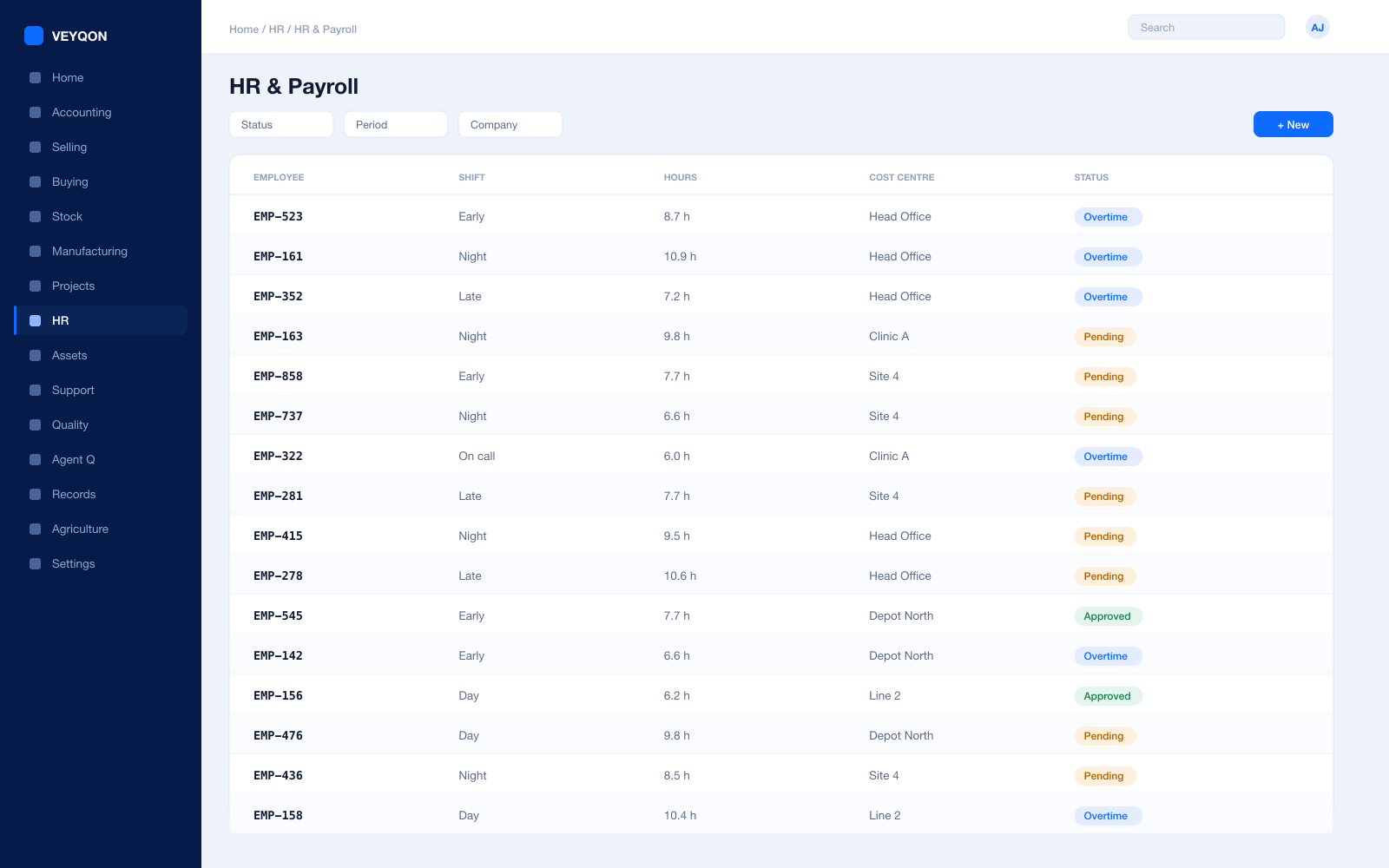
Employees
Staff on one record, with the programmes and funds their time is charged to.
Salary across funds
One post apportioned across several funds by percentage, which is how most restricted funding actually works.
Timesheets
Hours booked against a programme, so an apportionment is evidenced rather than asserted to a funder.
Checks and training
Safeguarding checks and mandatory training with expiry dates that surface before they lapse.
Expenses
Claims against a programme cost centre, approved and posted rather than reimbursed on trust.
Payroll
Salary structures and runs with statutory deductions, posted into the same ledger as the funds they draw on.
Portals & Integrations
Giving pages, funders, and whatever the fundraising team signed up for.
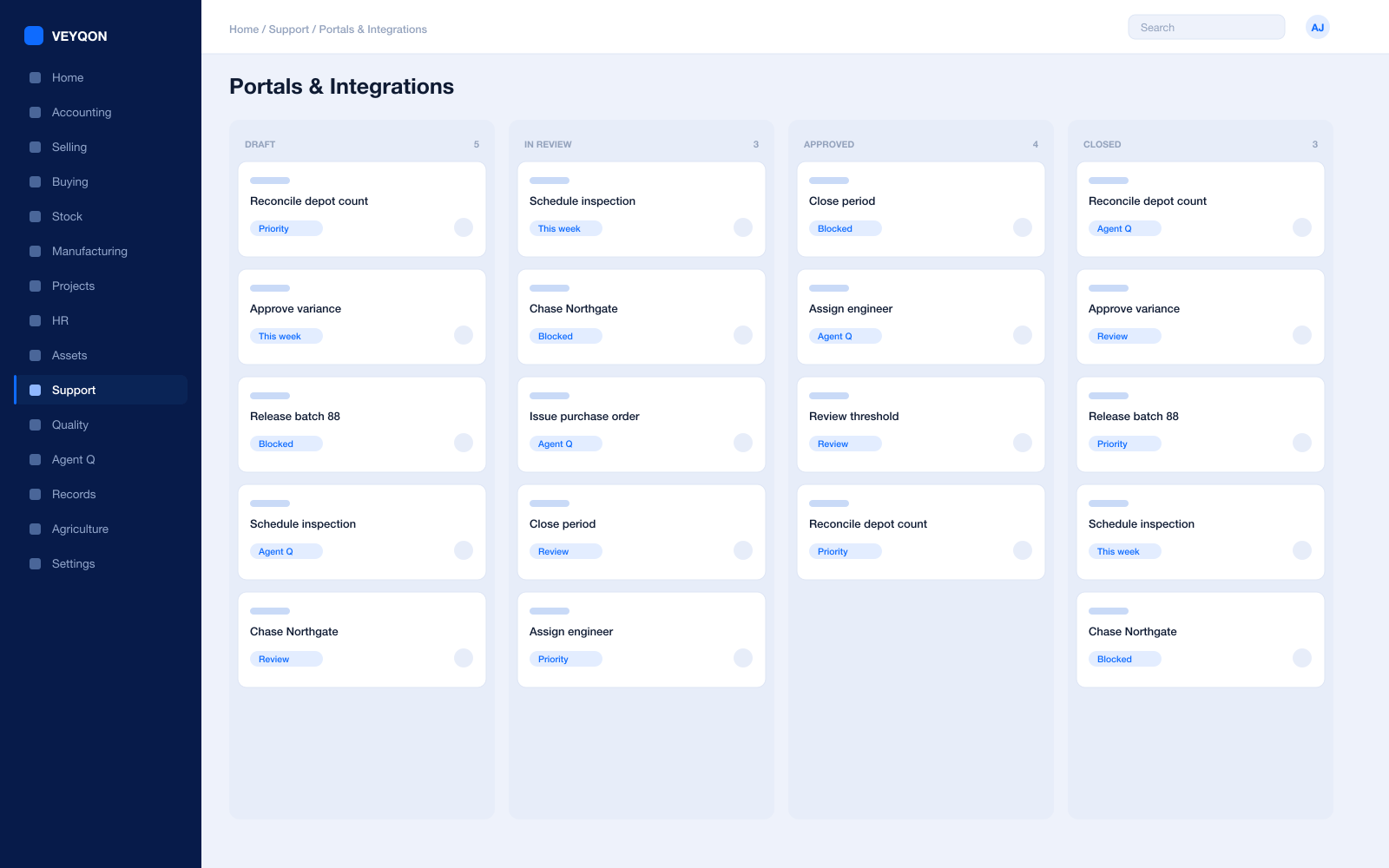
REST API on every record
Every document type is addressable over the API, with the same permissions the interface applies.
Webhooks
A state change on any document pushed to another system as it happens, rather than found on a nightly poll.
Payment gateways
Online giving landing as payment entries against the fund, rather than as a monthly statement to reconcile.
Scheduled jobs
Recurring imports, exports, and reconciliations on a calendar, with a log of what ran and what it did.
Bulk import and export
Spreadsheet import with validation for supporter data, and export of anything you can see.
Supporter portal
Donors and members updating details, renewing, and downloading receipts without emailing the office.
One pass through non-profit, end to end.
- 01
Receive
Every gift lands against a donor and the fund it is restricted to.
- 02
Allocate
Spend posts to the programme cost centre, not a general pool.
- 03
Deliver
Volunteer hours and programme activity recorded as they happen.
- 04
Report
Fund-level statements a trustee or a funder can be handed directly.
Running non-profit on VEYQON, in four steps.
It is a subscription, not a project.
- 1
Subscribe
Pay by card. Provisioned straight away.
Minutes - 2
Bring your data
Balances, items, customers, suppliers.
Day one - 3
Switch modules on
Warehouses, limits, and approvals.
Week one - 4
Go live
Run parallel, then cut over.
You choose
All 10 modules included. Nothing sold separately.