Rooms and covers, on the same books.
Room reservations, restaurant orders, and stock consumption in one ledger, so a night's revenue and a night's cost arrive together.
9 modules·75 features·Configured on the core
The modules behind hospitality.
Not a list of module names. Each one below opens onto what is inside it and why a hospitality business needs it — so you can check it against how your operation actually runs.
Archived upstream on 4 October 2023 and read-only since. We maintain the hotel and restaurant records on our own fork, and will tell you exactly what that means before you commit.
Agent Q
Agents that read your own records and act on them, scoped to how a hospitality business runs.
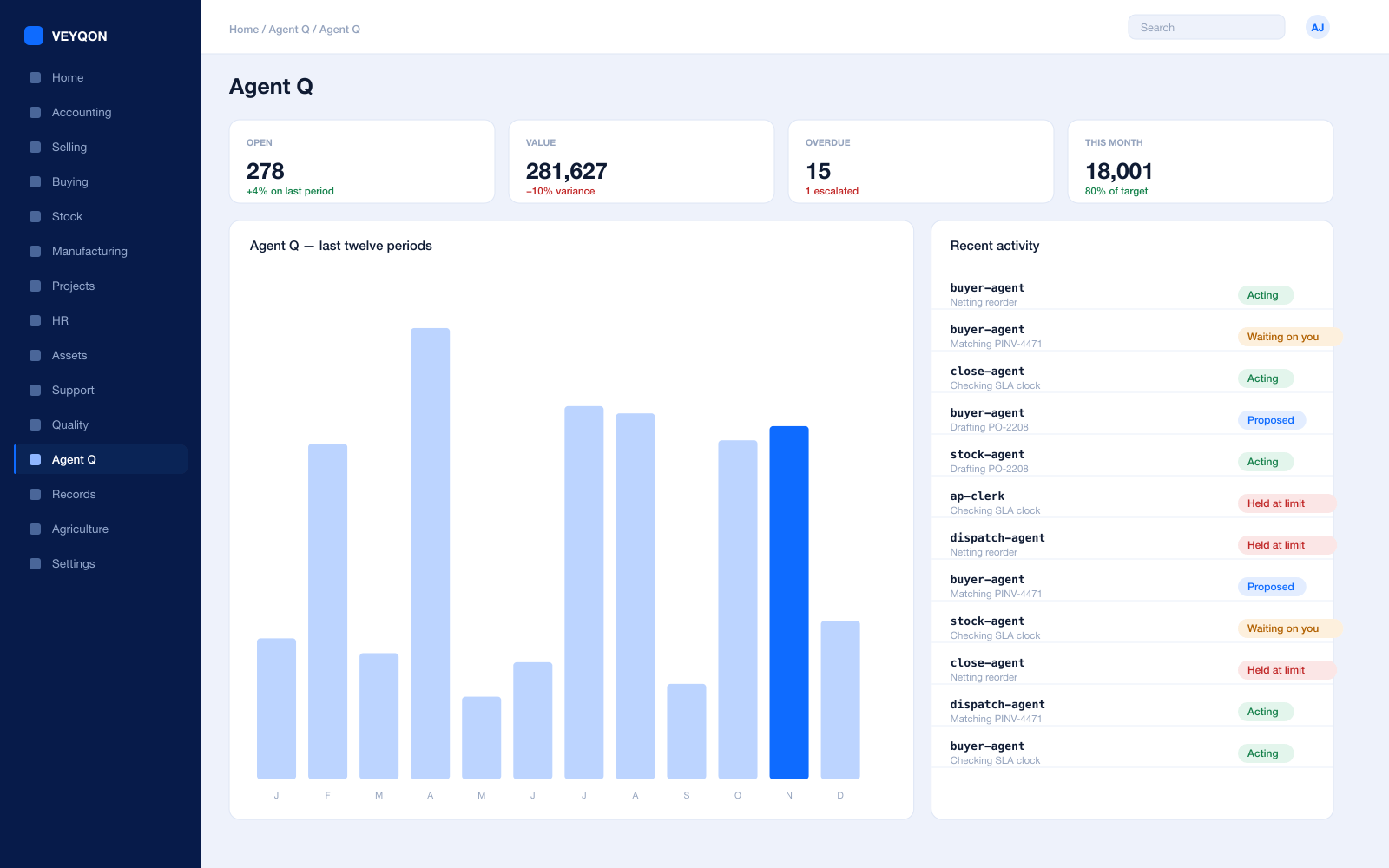
Grounded in live records
Every answer is drawn from your own ledger with your permissions applied, and names the documents it used. Nothing is answered from a snapshot or a summary.
A role, not a prompt
Each agent is scoped like a job — accounts payable, procurement, dispatch, period close — with the same limits you would put on the person doing it.
Explicit tool permissions
An agent holds a named list of the actions it may take. Matching an invoice does not imply paying one.
Value and action limits
A hard ceiling per agent, per period, and per document type, which it cannot cross however it is asked.
The queue
What every agent is working on, what is waiting on a person, and what has been held — in one place, with the reason on each item.
Triggers
An arriving document, a breached threshold, a date, or a state change on a record. Agents start on events, not on somebody remembering.
Human approval gates
Anything over a limit routes to a named person, with the reasoning attached, so approving takes seconds rather than an investigation.
Escalation paths
Who it hands to when it reaches a limit, how long it waits first, and what that person sees when it arrives.
Segregation of duties
An agent cannot approve what it raised. The rule that applies to your people applies to your agents.
Full reasoning log
Every step is written to the audit trail on the document it touched, so a decision can be read back months later.
Ask in plain language
The console answers operational questions from live records and offers the next action, rather than handing back a paragraph.
Spend control
Ceilings per agent and per period, so autonomy runs to a budget you set rather than an open account.
Rooms & Reservations
The room, the rate on it, and the folio it accrues to.
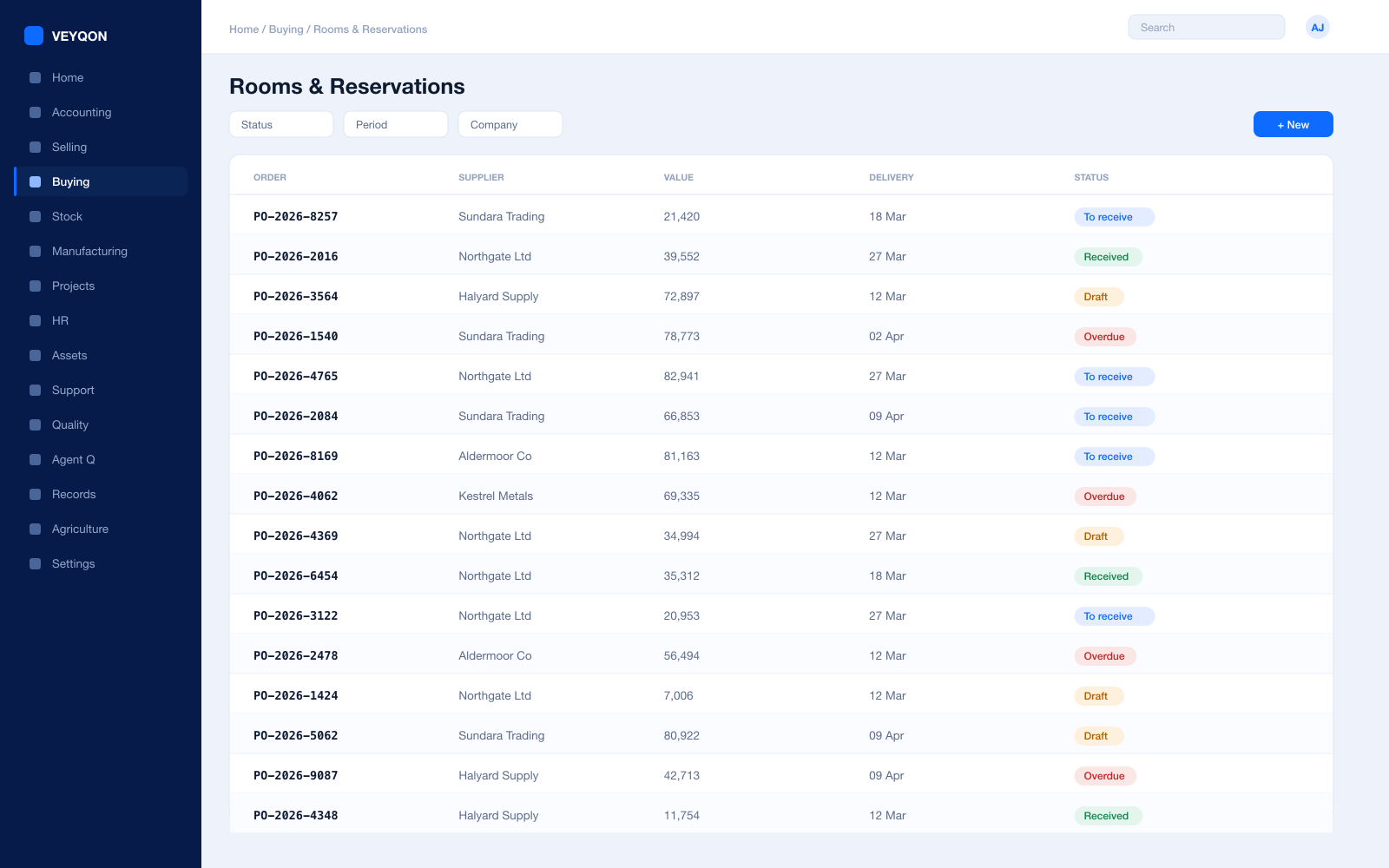
Hotel room
The physical room with its type and capacity, so availability is a count of real rooms rather than an estimate.
Room type
The class a rate attaches to, so pricing is set once per type instead of once per door.
Rate packages
A package with the items it includes, priced as a whole rather than assembled at the desk each time.
Rate validity
A package priced for a period, so a seasonal rate starts and stops on its own.
Reservation
Guest, dates, and package, with the room held against them and the booking visible to everyone who needs it.
Folio posting
Charges accruing against the stay as they happen and settling at checkout, rather than being collected on paper.
Revenue in period
A night’s revenue arriving in the same period as the night’s cost, which is the only way occupancy means anything.
Restaurant
Covers taken, and the stock they consumed, on one set of books.
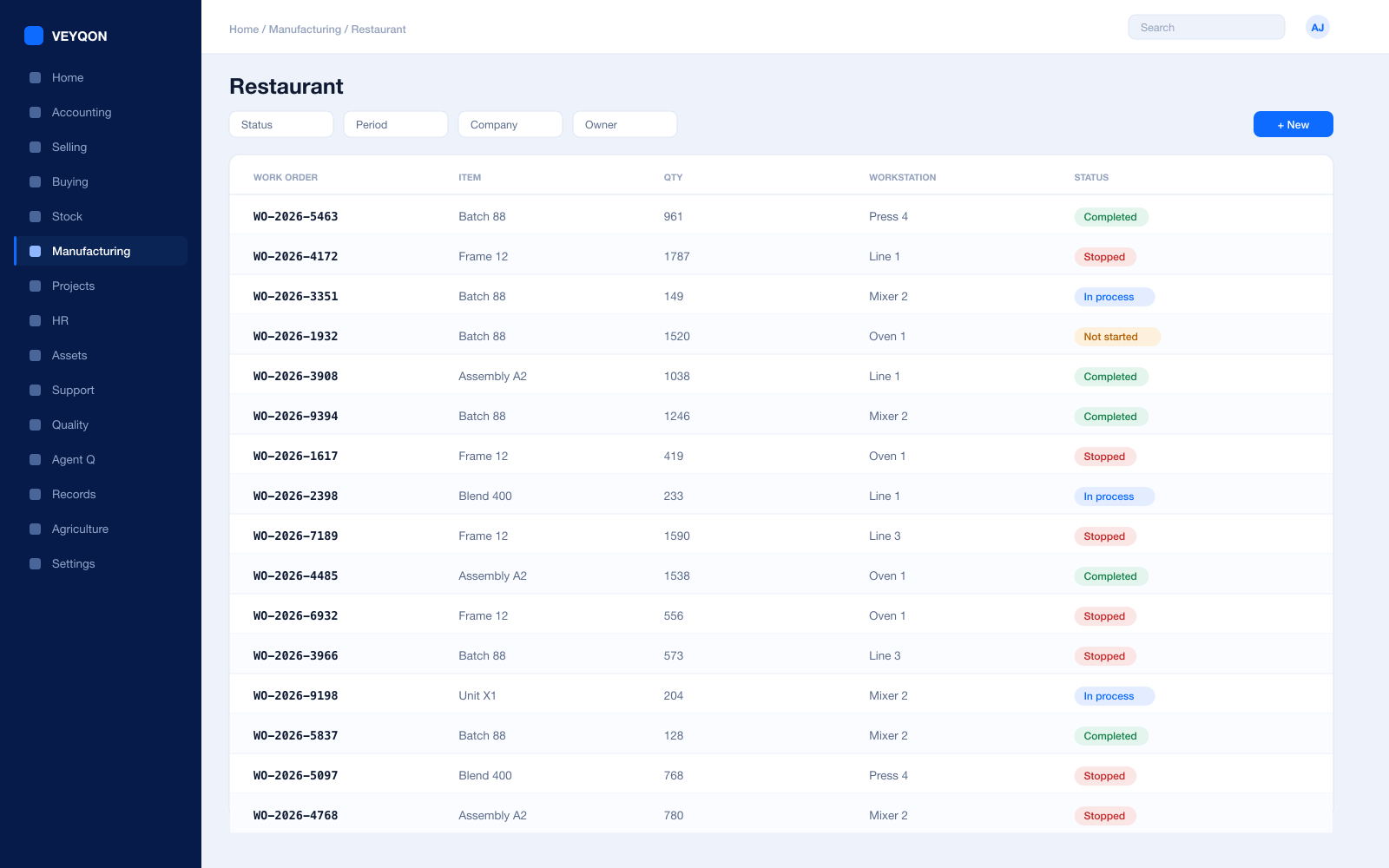
Restaurant
The outlet as a record, with its own menu, its own pricing, and its own place in the accounts.
Menu
Items priced per outlet, so the same dish can cost differently in the bar and the dining room without a second system.
Menu item to stock item
A dish linked to what it is made of, so selling it consumes ingredients rather than only taking money.
Tables
Covers held against a table, so an order has somewhere to belong before it has been paid for.
Order entry
Covers taken and posted as they close, rather than tallied at the end of service from a spike of dockets.
Bill to folio or table
Settle at the table, or post the charge to a room and let it settle at checkout.
Reservations
Bookings held against the outlet and the sitting, next to the room bookings rather than in a separate diary.
Stock & Kitchen
What the kitchen used, against what the restaurant sold.
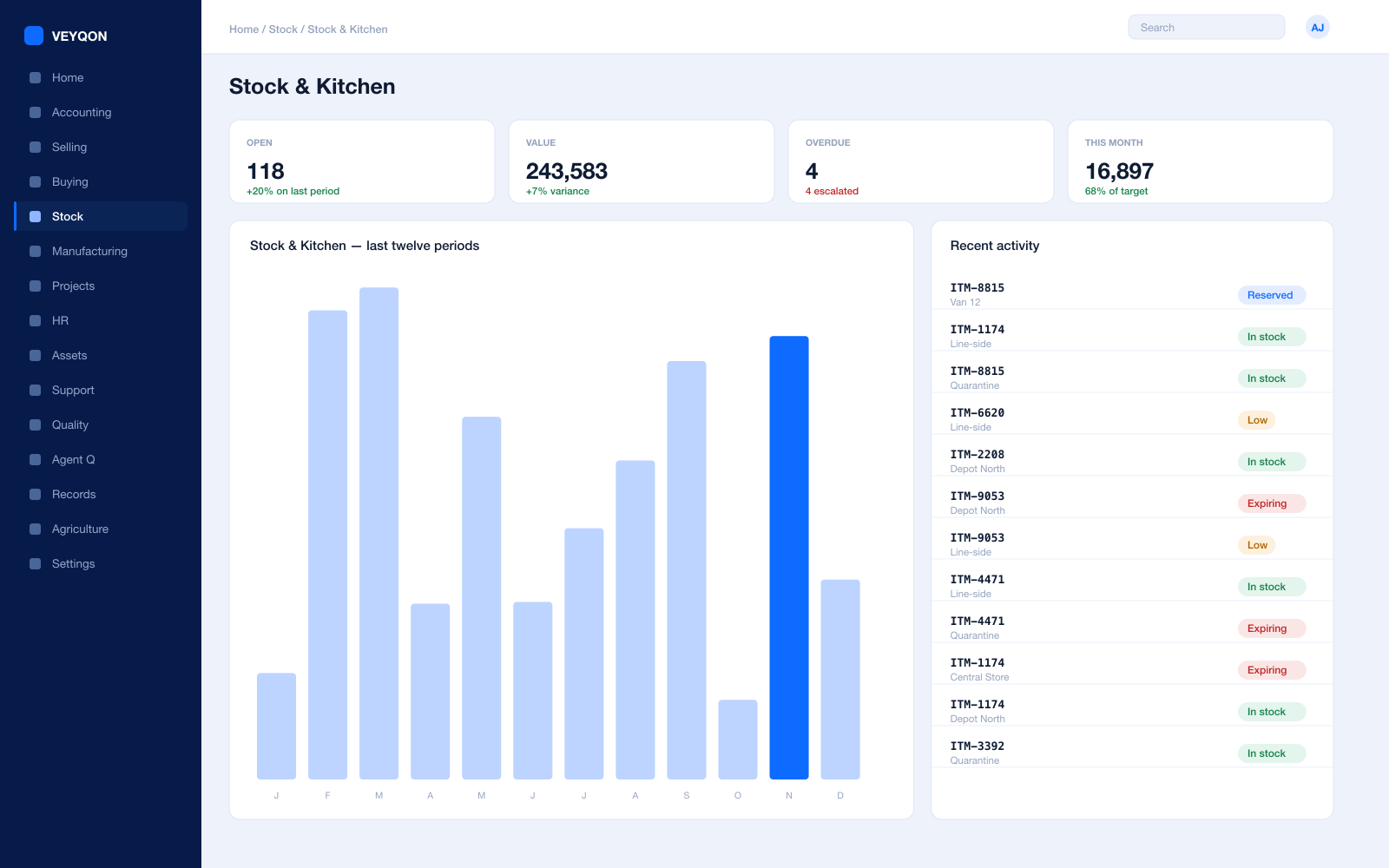
Stores per outlet
Cellar, kitchen, bar, and housekeeping stores in one hierarchy, so what is where is a query rather than a walk.
Recipe BOMs
A dish as a bill of materials, so its cost follows ingredient prices instead of being reviewed once a year.
Consumption against sales
Stock issued against what was sold, which is what turns gross profit per dish into a number.
Batch and expiry
Perishables with expiry, and batches picked nearest-expiry-first so the oldest goes out first.
Wastage with a reason
Spoilage and comps recorded with a reason rather than absorbed silently into a variance.
Stock reconciliation
Counts posted against book stock, with the difference valued and accounted.
Reorder levels
A reorder level per item and per store, so the kitchen does not discover a shortage during service.
Valuation
FIFO or moving average per item, with perpetual inventory posting to the ledger on every movement.
UOM conversion
Buy by the case, portion by the gram — one item, with the conversion on the record rather than in a chef’s head.
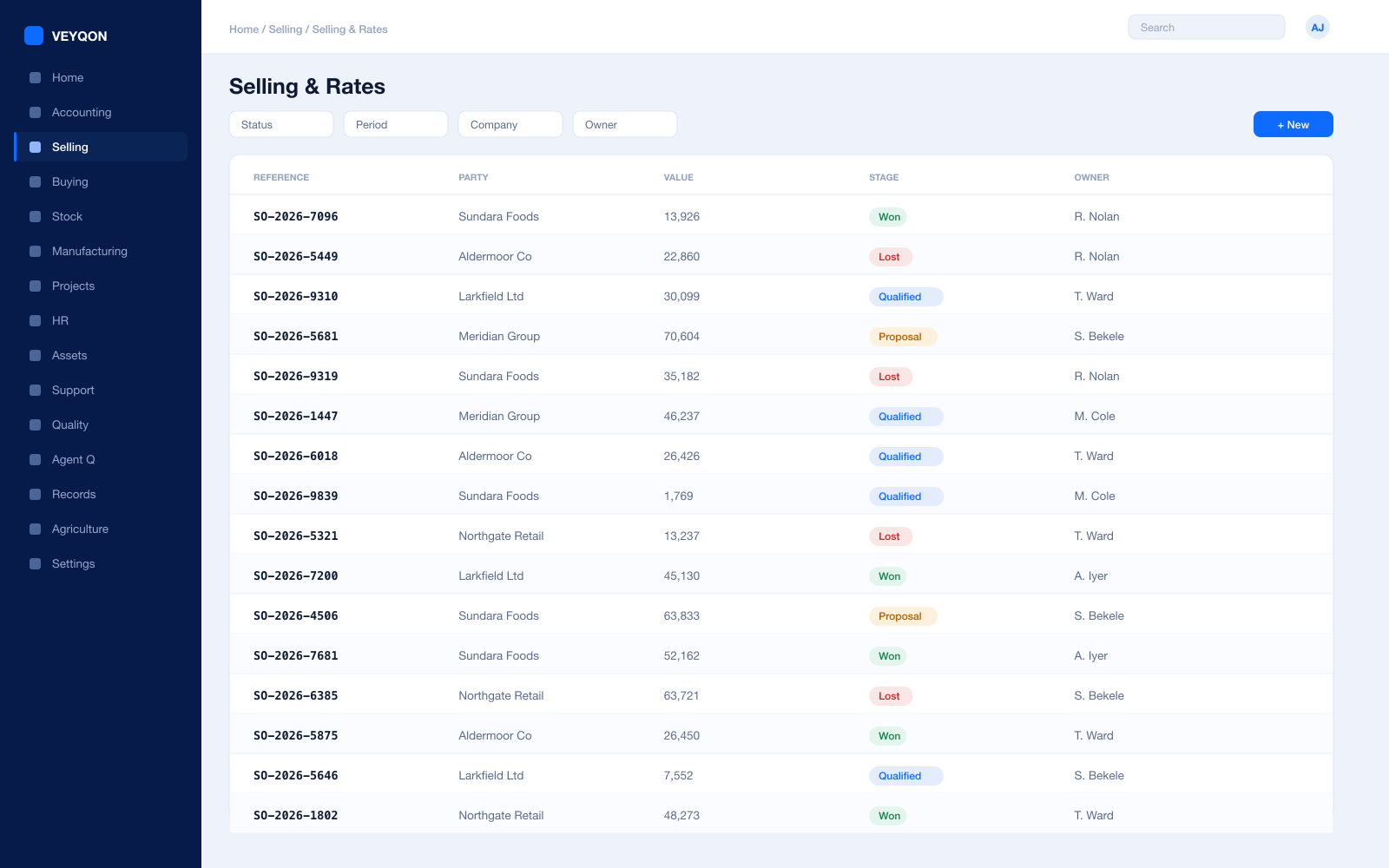
Selling & Rates
Corporate rates, group bookings, and the events that pay for the quiet months.
Price lists
Separate selling lists by channel, currency, or corporate account, so an agreed rate is simply the rate.
Pricing rules
By item or item group, for a customer, customer group, or territory, as a rate, a percentage, or a margin.
Seasonal validity
Rates valid between dates and above a minimum quantity, so a season ends without anyone remembering to end it.
Packages as bundles
A stay-plus-dinner sold as one line and consumed as its components.
Quotations for events
A written proposal with items, prices, validity, and terms, converting to an order when it is accepted.
Orders for groups
A sales order for a block booking or an event, with partial delivery and partial billing over the run of it.
Coupon codes
A rate that only applies to someone holding the code, with usage limits validated when it is used.
Credit limits
For corporate accounts on terms, blocking submission over the ceiling with a named role for the exceptions.
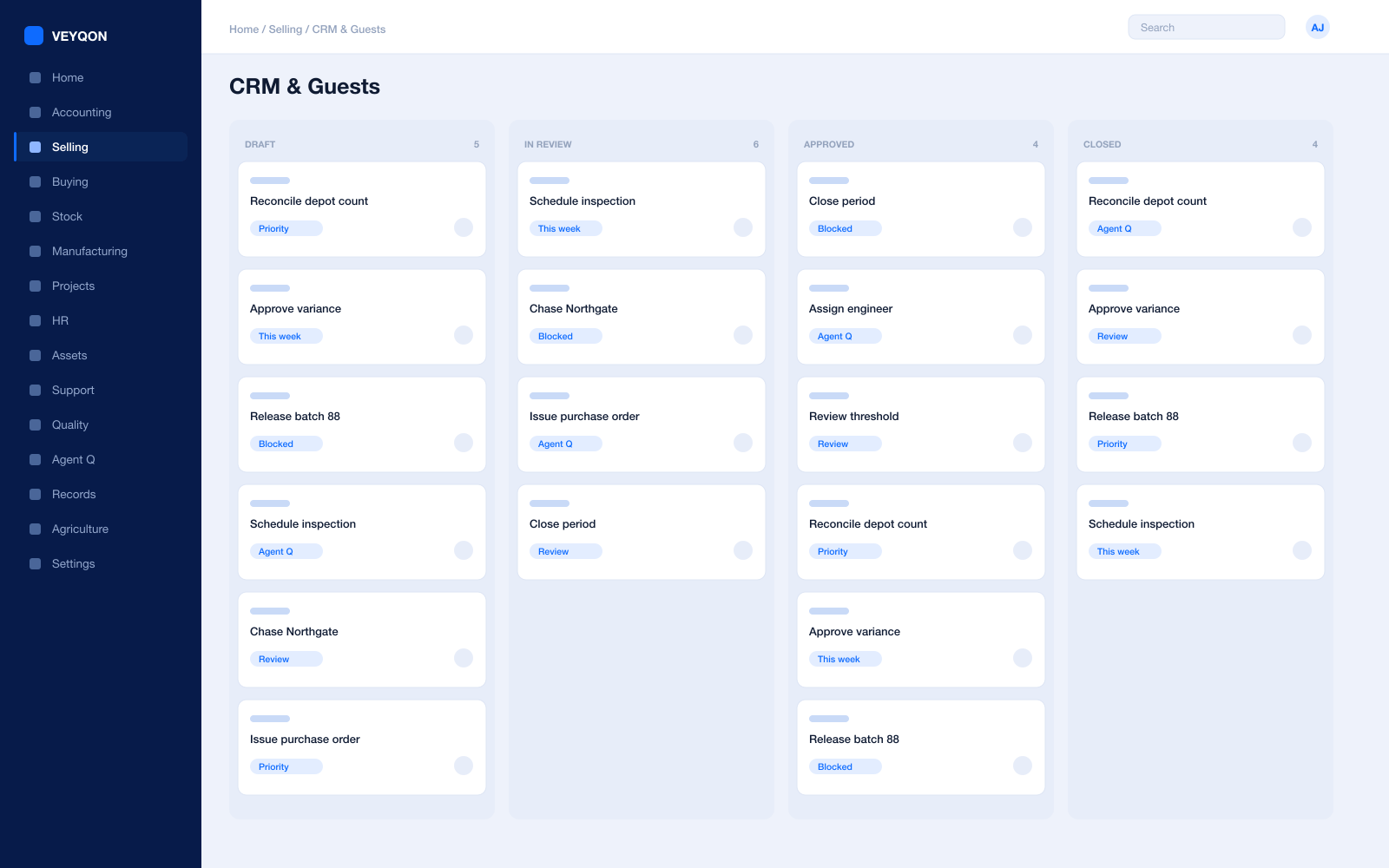
CRM & Guests
The guest who came back, and the agent who sent them.
Guest as customer
One customer record behind the reservation, the restaurant bill, and the invoice, rather than three.
Contacts and addresses
Held once and reused across booking, folio, and invoice instead of retyped at every touchpoint.
Opportunities for events
Weddings, conferences, and blocks as opportunities with a value, a probability, and an owner.
Campaigns and sources
Which channel or agent produced the booking, traceable from enquiry through to the invoice.
Loyalty
Points earned on submitted invoices with tiers by cumulative spend, a conversion factor, and an expiry.
Feedback
Held against the guest and the stay, so a pattern is visible rather than remembered by one duty manager.
Sales team and territory
A contribution percentage per person on the order, which is what attributes the booking when two people worked it.
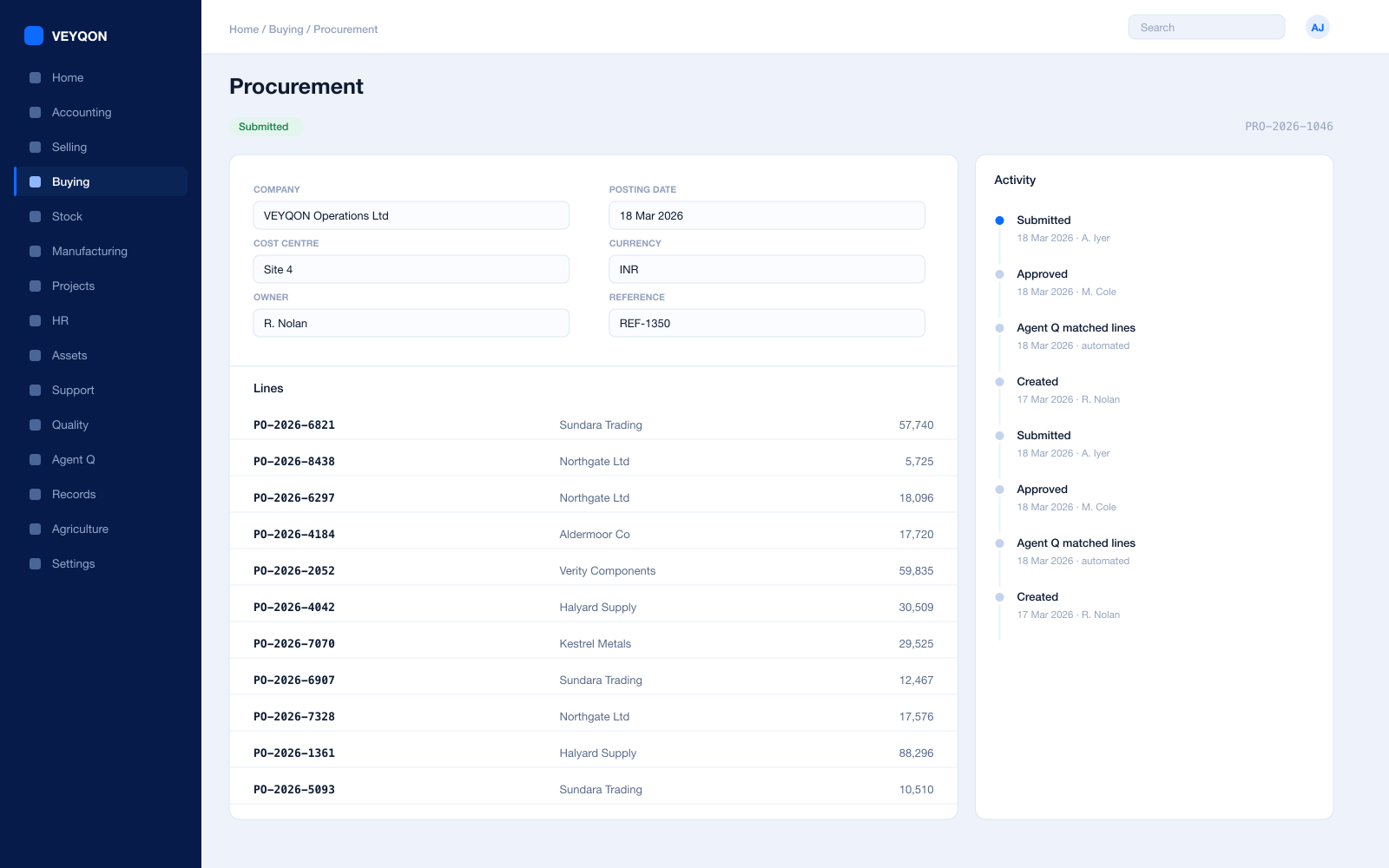
Procurement
Buying for a kitchen that cannot run out mid-service.
Material requests
Raised from a reorder level, from an outlet, or by hand, with approval routing by value and cost centre.
Requests for quotation
Out to several suppliers at once, with a portal for them to respond on rather than a mailbox to chase.
Purchase orders
Against supplier price lists, with a delivery schedule per line rather than one date for the whole order.
Blanket orders
An agreed quantity and price over a season, drawn down by individual orders against it.
Receipts with rejection
Accepted and rejected quantity split, with a rejected store and the inspection attached.
Three-way matching
Order, receipt, and invoice reconciled before anything is paid, with the variance visible.
Supplier scorecards
Quality, delivery, and responsiveness scored from your own receipts, with standings that can block a supplier.
Landed cost
Freight and duty distributed into item valuation on the receipt rather than into overhead.
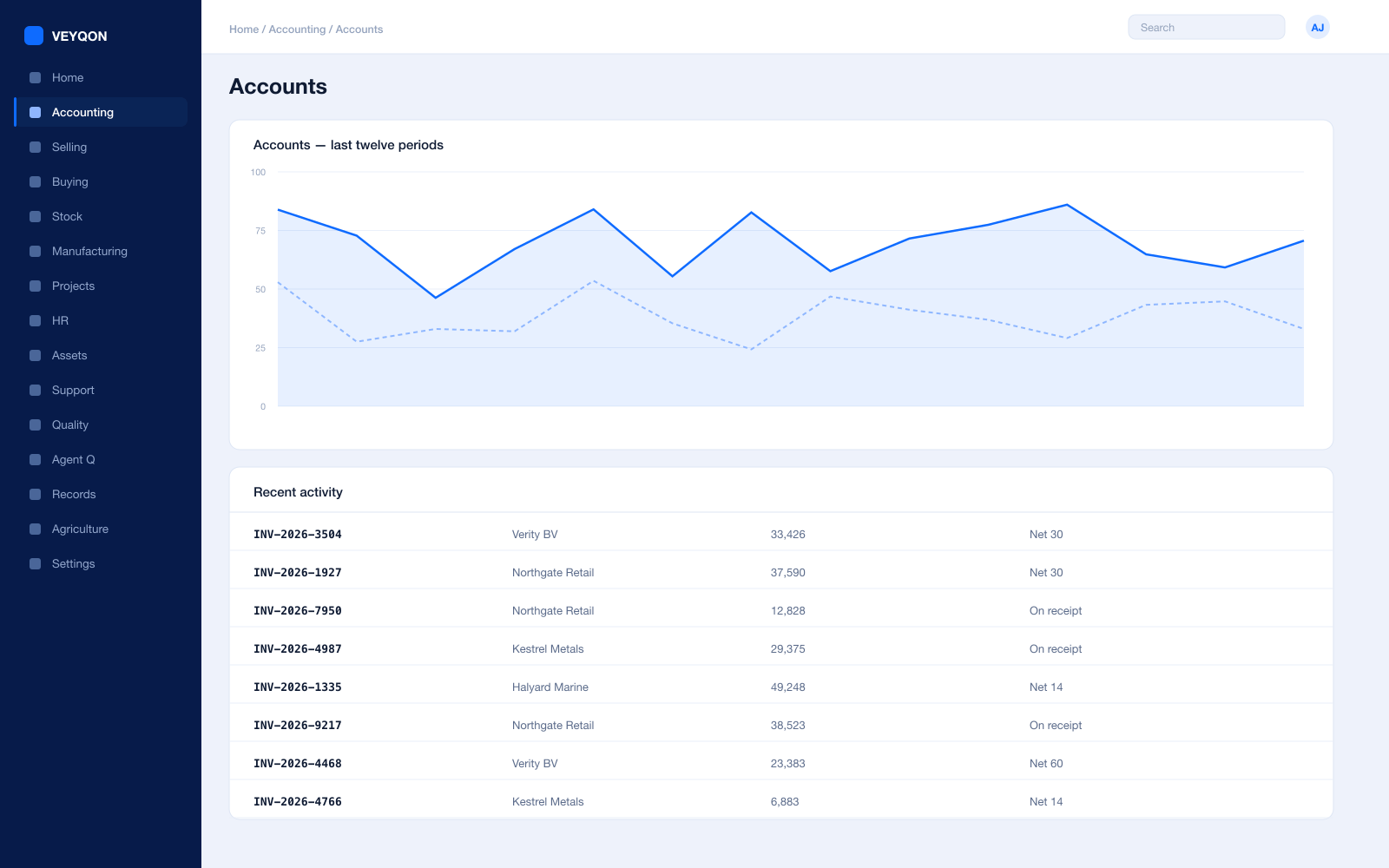
Accounts
Revenue and cost arriving in the same period, per outlet.
Perpetual inventory
Every stock movement posts to the general ledger as it happens, so the cellar and the accounts cannot drift apart.
Revenue against cost
A night’s takings and a night’s consumption in the same period, so gross profit is not a monthly guess.
Cost centres per outlet
Rooms, restaurant, bar, and events as cost centres, with allocation splitting shared cost by percentage.
Budgets
Against cost centres, with the action on exceeding set to warn the person or stop the document.
Multi-currency
Guests and agents settling in their own currency, with revaluation posting to the ledger.
Period close
Accruals, reconciliation, and a period lock that stops anyone back-posting into a month you have reported.
Statutory tax
VAT, GST, and tourist or city taxes with your region’s filing formats.
Audit trail
Every posting carries who, when, and from which document, including the ones a till created.
Banking and settlement
Card settlements matched to the invoices they clear rather than reconciled by eye.
HR & Payroll
Housekeeping, kitchen, and front desk on one rota and one ledger.
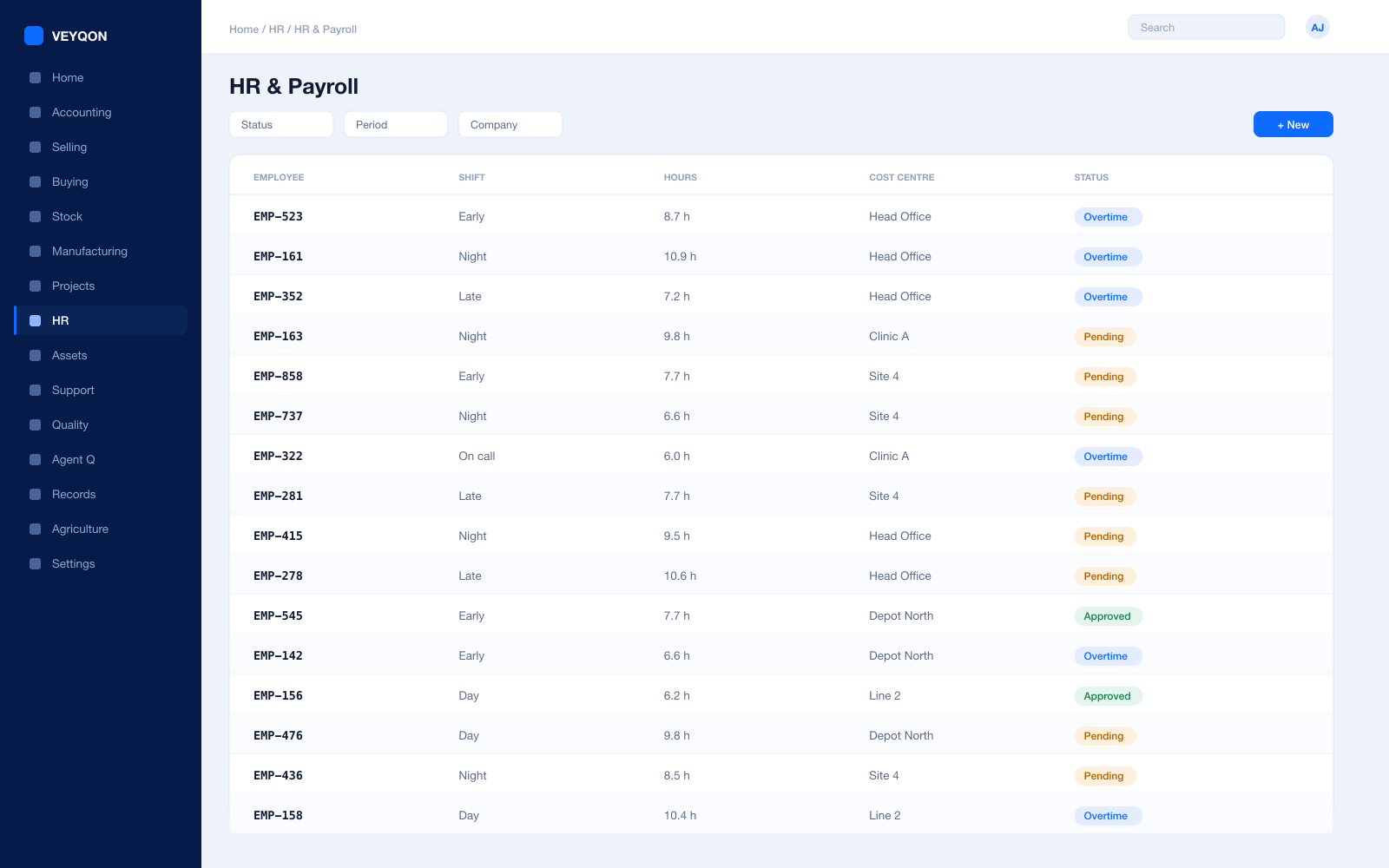
Shifts across departments
Housekeeping, kitchen, bar, and front desk rostered together, so cover is planned across the property rather than per department.
Attendance and check-in
From devices or check-in, feeding shift compliance and overtime instead of a book behind reception.
Cover and overtime
Gaps visible before the week starts, when they can still be filled without paying a premium for it.
Leave and holiday lists
The working calendar that rota planning and seasonal staffing are actually built against.
Labour per outlet
Hours costed to the outlet they were worked in, so a department’s margin includes its people.
Expenses
Claims against a cost centre, approved and posted rather than settled from the float.
Payroll
Salary structures and runs with statutory deductions, posted into the same ledger as everything else.
Training and certification
Food hygiene and licensing certificates held against the employee, with expiry dates that surface before they lapse.
One pass through hospitality, end to end.
- 01
Rate
Packages and seasonal rates set once, applied at reservation.
- 02
Book
Reservations hold the room and open a folio for the stay.
- 03
Serve
Restaurant orders post to the folio or settle at the table.
- 04
Reconcile
Revenue, consumption, and labour land in the same period.
Running hospitality on VEYQON, in four steps.
It is a subscription, not a project.
- 1
Subscribe
Pay by card. Provisioned straight away.
Minutes - 2
Bring your data
Balances, items, customers, suppliers.
Day one - 3
Switch modules on
Warehouses, limits, and approvals.
Week one - 4
Go live
Run parallel, then cut over.
You choose
All 9 modules included. Nothing sold separately.